2012 Academy of Distinguished Alumni Announced
The Walker Department of Mechanical Engineering has announced the 2012 honorees of its Academy of Distinguished Alumni.
As a way of recognizing the accomplishments and careers of our outstanding alumni, the Walker Department of Mechanical Engineering established the Academy of Distinguished Alumni in 2004. The Academy’s purpose is to recognize high-achieving mechanical engineers from among the UT Austin community and from the engineering community at large, to champion the mechanical engineering profession and to build a strong community and facilitate interactions among our students, faculty, alumni and corporate partners.
This year’s honorees include:
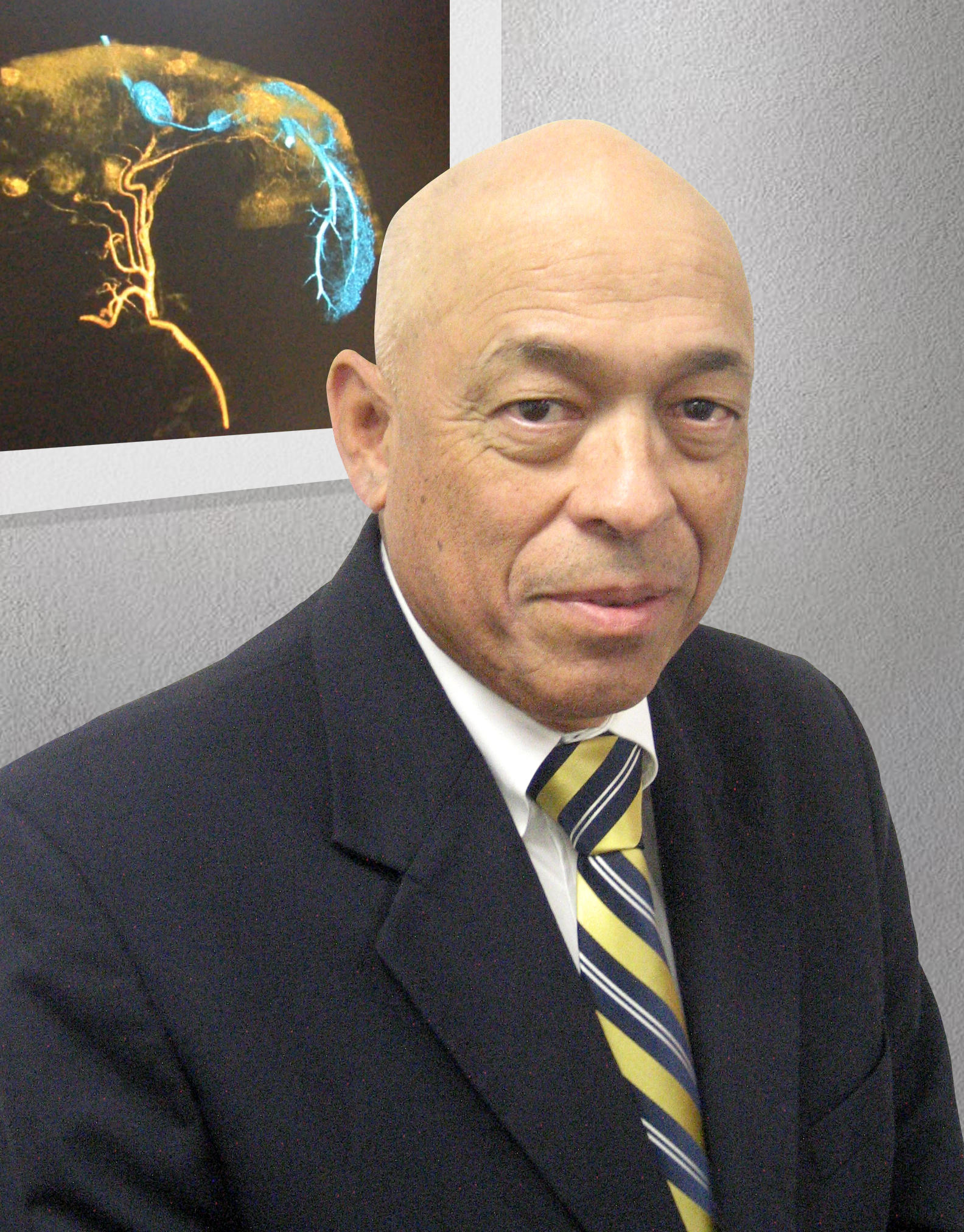
Reynaldo Calderon
Distinguished Mechanical Engineer
BS, Southwestern University, 1970
BSME, The University of Texas at Austin, 1970
M.D., Baylor College of Medicine, 1978
Dr. Rey Calderon, a native of Houston, Texas, is a mechanical engineer, physician, and entrepreneur who takes a cross-disciplinary approach to solving problems in math and medicine, engineering, technology, and science, the inverse to STEM. He developed a solid background in mathematics and science at Southwestern University in Georgetown, Texas, where he was encouraged to enroll in the university’s dual degree engineering program. In 1967 he enrolled in UT Austin’s Department of Mechanical Engineering and in 1970 earned a BS in mathematics from Southwestern and a BS in mechanical engineering from UT Austin.
Rey returned to Houston and began his career at Texaco, Inc. as an applied systems engineer. Between 1970 and 1974, he was awarded fifteen patents for a variety of oilfield tool designs. In 1974 Rey entered Baylor College of Medicine where he received an M.D. in 1978, and completed a residency in pediatrics in 1981. Has been a mentor to countless patients, inspiring and encouraging them to pursue careers in math, science, engineering, and medicine. He also served as mentor in the Upward Bound Program at Houston Community College Central campus, motivating high school students to become the first generation in their families to attend college.
Rey brings an engineering mind to the practice of medicine. He holds five patents for the design of the Otricath™ system, an innovative platform technology designed to create new ways of thinking in a broad spectrum of medical applications from cancer therapeutics, imaging, and diagnostics, to basic research and pharmaceutical development. Rey’s novel catheter design overcomes barriers to solid tumor therapy by applying the fundamental principles he learned at UT in fluid dynamics, heat transfer, and thermodynamics. In 2012 a simulated model of Rey’s work served as a research project for Sarah Miller, an outstanding UT undergraduate mechanical engineering student.
Following a period of basic research and design, in 2014 Rey became founder and chief scientific officer of NHC, LLC, a life sciences medical device and innovation company. In 2016 NHC completed the first Texas Medical Center Innovation Institute (TMCx) medical device accelerator program. As a TMCx member company, NHC focuses on bringing solutions to challenging medical problems from bench to bedside with the support of the vast resources of the Texas Medical Center.
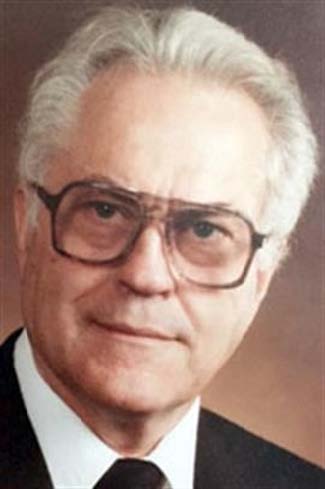
R. Don Foster
Mechanical Engineering Hall of Fame
BS, Physics, West Texas State Normal College
BSME, The University of Texas at Austin, 1948
Don Foster enjoyed the hobby of building scaled replica engines in his garage metal shop. Averaging 10 hours a week for over 40 years, Don has portrayed the history of engines as far back as 80 A.D. Steam engines, internal combustion engines, external combustion engines, and a working steam tractor show every detail to scale. Don has gifted these beautiful, historical engines to The University of Texas Mechanical Engineering Department for display.
Don was born in Canyon, Texas, in 1922, where in his early youth, his “tinkering” habits were formed while watching the local blacksmiths. Growing up in Boy Scouts, Don enjoyed camping and exploring Palo Dura Canyon on his way to becoming an Eagle Scout. Working in his father’s garage, Don’s “tinkering” led him to become the town’s bicycle repairman. Completing a Physics degree from West Texas State Normal College (now West Texas A&M), Don became an active duty meteorologist for the United States Army Air Corps. After the war, Don acquired a second degree in mechanical engineering from The University of Texas at Austin in 1948 on the GI Bill. Don is a member of the American Society of Mechanical Engineers, the Society of Industrial Archeology, Tau Bet Pi, and Pi Tau Sigma.
Professionally, Don worked for CRC (Crutcher, Rolfs and Cummings) in Houston, Texas, as Chief Engineer for 6 years. He then worked for Sterling Packing & Gaskets prior to starting his own consulting business in 1956. His business, Foster Consulting Engineering, was heavy in design for pipeline equipment, oil fields, metallic buildings, as well as other projects presented by clients. Over the years, Don has developed close to 30 patents, some on behalf of his clients and others his own. Later, Don provided expert witness testimony for legal cases as a part time business.
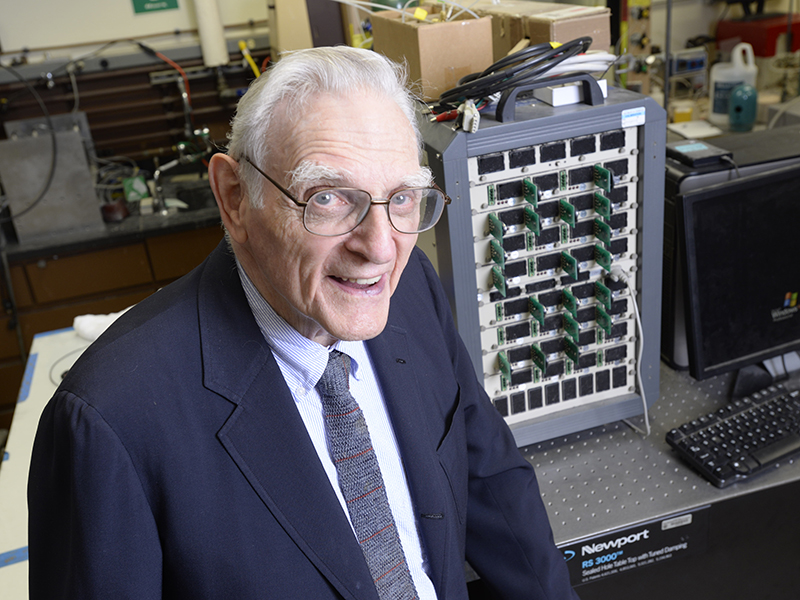
John Goodenough
Honorary Mechanical Engineer
BA, Mathematics, Yale University, 1943
MS, Physics, The University of Chicago, 1951
Ph.D., Physics, The University of Chicago, 1952
John Bannister Goodenough is known for his insights into the d-electron behavior of transition-metal solids. In the 1950s, he identified structural transitions in transition-metal oxides induced by cooperative d-orbital ordering; he used this insight to enable the ferrimagnetic memory elements of the first random-access memory (RAM) of the digital computer and also to develop the Goodenough-Kanamori rules for the sign of the interatomic spin-spin interactions of magnetic materials. In the 1960s, he demonstrated the chemical origin of the d-electron interactions in transition-metal oxides to clarify where those ceramics would be metallic and were magnetic insulators, as well as the phenomenon of single-ion magnetic anisotropy.
The oil crisis of the 1970s turned his attention to materials for energy conservation and storage of electric power in rechargeable batteries, which led to his oxide cathodes for Li-ion rechargeable batteries that have enabled the wireless revolution and the advent of the hybrid electric road vehicle. Since 1986, he has studied ionic conductivity in ceramics, polymers, and a glass for rechargeable batteries; he has demonstrated dendrite-free plating of alkali-metal anodes as well as stable catalytic activity at oxygen electrodes, and he has returned to the study of the variety of physical properties imparted to transition-metal oxides by d-electrons at the crossover from localized to itinerant behavior, including high-temperature superconductivity, colossal magnetoresistance, and charge-density waves.
Goodenough received a BA in mathematics from Yale University in 1943 (Class of 1944) while serving as a meteorologist in the USAAF during World War II; he obtained an MS and Ph.D. in physics from The University of Chicago in 1951 and 1952.
From 1952 to 1976, he was a research scientist and group leader at the MIT Lincoln Laboratory. In 1976, he accepted an appointment as professor and head of the Inorganic Chemistry Laboratory in Oxford, England; and facing retirement in England in 1986, he accepted the Virginia H. Cockrell Centennial Chair in Engineering at The University of Texas at Austin.
Professor Goodenough is a member of the U.S. National Academies of Engineering, Sciences, and Inventors; a Foreign Associate of L’Academie des Sciences de L’Institut de France, Academia de Ciencas Exactas, Fisicas y Naturales of Spain, and the Royal Society (UK). His Awards include Laureate of the Japan Prize, 2001; the Presidential Enrico Fermi Award, 2009; the National Medal of Science, 2012; the Charles Stark Draper Prize of the National Academy of Engineering, 2014; the Eric and Sheila Samsun Prime Minister’s Prize for Innovation in Alternative Fuels for Transportation in 2015; and the Robert A. Welch Award in Chemistry (2017).
In 2019, he was awarded the Nobel Prize in Chemistry alongside M. Stanley Whittingham and Akira Yoshino; at 97 years old, he became the oldest Nobel laureate in history. From August 27, 2021, until his death, he was the oldest living Nobel Prize laureate.
Goodenough and his wife were married for over 70 years until her death in 2016. His brother, Ward, who was an anthropologist and professor at the University of Pennsylvania, died in 2013.
David E. Leigh
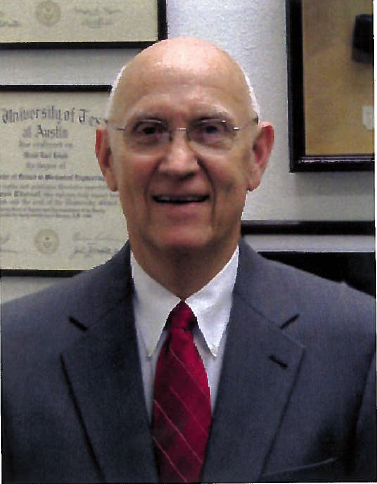
Mechanical Engineering Hall of Fame
BSME, The University of Texas at Austin, 1968
MS ORIE, The University of Texas at Austin, 1972
David E. Leigh was born in Temple, Texas, in 1945 to Rush and Virginia Leigh of Pendleton. David grew up on a farm with his older brother Harold and attended public school in Troy, Texas. He followed his brother to The University of Texas at Austin to study engineering in the 1960s, and went on to graduate with a Bachelor of Science degree in mechanical engineering in 1968. When Harold was asked why he wanted to major in engineering, he stated, “We grew up on a farm near the railroad. I always looked out at those trains and thought, ‘Now that’s the job for me.’ So, during my study hall, I started doing some research on ‘Engineer’ and found that I didn’t really understand what an engineer was. But, since I was good at math and science, I still thought being an engineer might be something I’d like to do.”
Upon graduation, David was offered a job at IBM as they started operations in Austin. But his plans for employment were delayed by a couple of years as he served in the military at Aberdeen Proving Grounds in Maryland. While there, he completed an MS degree in Administration with specialization in Management Engineering. With his commitment to the military fulfilled, he returned to Austin to start a family and a new career at IBM. He went on to complete a MS in ME with an operations research specialization. David’s career focused on advancements in manufacturing and took him from the production of typewriters in the late ‘60s to servers in the 1990s. He retired from IBM after 24 years in 1992.
In 1995, David (along with his son) founded Harvest Technologies, Inc., which utilizes the laser sintering process developed in the Department of Mechanical Engineering in the 1980s. He has been instrumental in guiding the growth of the company as the CFO and has helped develop a new era in digital manufacturing.
His legacy continues with both of his sons as well as his grandchildren. His son, David, is a graduate of the Department of Mechanical Engineering at UT Austin, and his son James is a business graduate of Texas Tech University and works at the corporate office of Southwest Airlines in Dallas.
Christopher Pappas
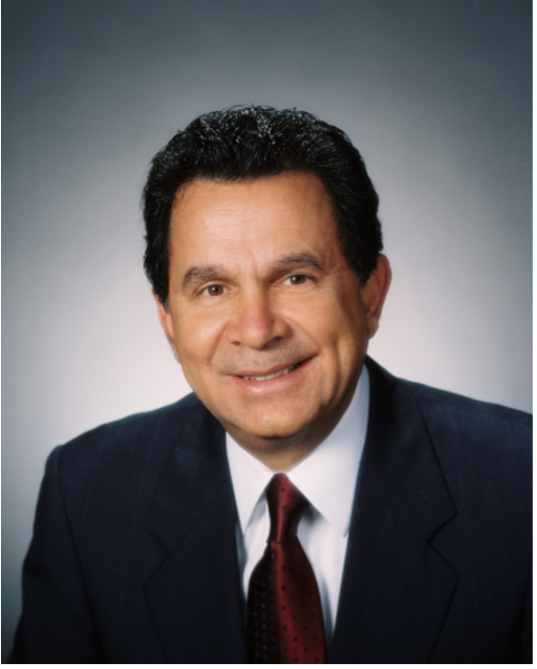
Distinguished Mechanical Engineer
BSME, The University of Texas at Austin, 1970
Christopher J. Pappas was raised in Houston, Texas around his family’s restaurant equipment business. As a kid, he loved working with his hands, building go-karts, motorbikes and together, with his brothers, restoring a 1931 Model “A” Ford that they then proudly drove to school. Chris appreciated the inherent longevity and visible nature of mechanical systems, and this in turn led him to major in mechanical engineering. It has served as a foundation of his success throughout his career.
Chris chose to pay for his own education working for the Southwestern Company (est. 1865), which employs college students to sell books door-to-door. It was challenging work, and for three years his summers were spent knocking on doors, sunup to sundown, giving over 5,000 family presentations, learning about people and the importance of persistence. His most enduring lesson was how to change a “no” into a “yes!”
After graduating from The University of Texas at Austin in 1970, IBM hired Chris as a mechanical engineer in Austin. As part of the Office Products Division, he used his training to help refine one of IBM’s earliest word processors, which combined existing typewriter technology and a computer.
Chris watched his father and uncles work together as a team to transition the family business from a restaurant equipment provider to a chain of diners. This reinforced a dream in him and at 18 years of age, he knew that someday he wanted to use his and his brothers’ talents to succeed in a family business. The dream began to take shape when Chris left his mechanical engineering position at IBM and started working in one of his family’s restaurants, learning the business from the ground up as a short order cook in 1974.
Chris and his brothers went on to open The Strawberry Patch in 1976. From that time, Pappas Restaurants has expanded to nine brands, including Pappasito’s, Pappadeaux, Pappas Bar-B-Q, and Pappas Bros. Steakhouse. The Pappas brothers built the business with core values of plentiful food, reasonable prices, consistent service and happy guests. These values became the hallmark of Pappas Restaurants. If a guest felt something wasn’t right, it was always to be addressed before they left the restaurant.
Today, Chris uses his engineering background for restaurant layout, custom equipment fabrication and kitchen design in the family’s 100+ locations. This expertise has also enabled the company to donate kitchen design services and equipment to groups including the YMCA, Boy Scouts of America, Star of Hope, Houston Food Bank, Kids Meals, the Houston Greek Orthodox Church and many others, allowing them to further serve those in need.
Chris feels fortunate to have been shaped by his education and degree in engineering. One of Chris’s greatest joys has been to see the personal growth of thousands of individuals who have made a career with Pappas Restaurants over the years.
Chris and Maria, his wife of over 35 years, still live in Houston, and have five adult children who have also grown up in the family business. While raising his kids, Chris inscribed this well-known quote on their bedroom mirrors: “If it is to be, it is up to me.” (William H. Johnson). It has served them well.
Amy Yip
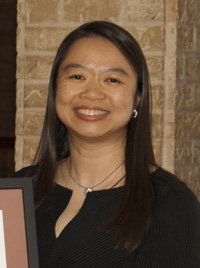
Outstanding Young Mechanical Engineer
BSME, The University of Texas at Austin, 1998
MSE, The University of Texas at Austin, 2015
Amy Yip was recognized as the Outstanding Young Mechanical Engineer in 2012 for the successful work she has already done in the Mechanical Engineering field. In 2015, Amy was seconded by Chevron to work for Tengizchevroil LLP in Atyrau, Kazakhstan as the assurance, interface & risk engineer for the Future Growth Project (FGP). Before this position, she was a systems completion coordinator in the Project Resources Company at Chevron. Her work with Chevron started as a production engineer in West Texas in 1998, and moved on to being a facilities engineer in their Midcontinent Business Unit, working on projects in East Texas and Oklahoma. In 2006, she moved to Paris, France, to work as a subsea pipeline engineer on the Tombua Landana Project that is located offshore of Angola. Amy has also worked as the Facilities Engineering Horizons program coordinator, where she could meet and motivate all the new hire facilities engineers entering Chevron. She holds both a BS in Mechanical Engineering and an MS in Engineering (Management) from The University of Texas at Austin.
Amy enjoys traveling and spending time with her family and friends, and is very active in the West Houston Chinese Church. She also has a heart for volunteering and supports the Houston Food Bank as well as Junior Achievements.
One of Amy’s passions is to inspire and encourage young women to pursue careers in math and science, which is in alignment with her continued involvement in the Society of Women Engineers (SWE). In 2008, she was elected the FY09 SWE Houston area section president. She has also served as the FY08 SWE Houston Area section representative while living and working overseas. She has been recognized by the SWE Houston Area Section as a Distinguished Volunteer and as the 2006 Young Engineer of the Year. Amy joined SWE as a collegiate member and served as the UT SWE president in 1997-1998. She was honored with the 1998 Departmental Student Leadership Award. She was among the very first group of Leadershape Texas participants in 1997, and then came back in 2014 to be a Leadershape family cluster mentor at UT Austin.
In alignment with her passions and plan to leave a legacy, in 2012 Amy established an Endowed Presidential Scholarship in Mechanical Engineering at UT Austin honoring her parents, Sun and Yim Yip. Her parents have been some of her biggest supporters in her education and career and she would like to extend that to help and inspire others.