2026 Academy of Distinguished Alumni Announced
The Walker Department of Mechanical Engineering has announced the 2026 honorees of its Academy of Distinguished Alumni.
As a way of recognizing the accomplishments and careers of our outstanding alumni, the Walker Department of Mechanical Engineering established the Academy of Distinguished Alumni in 2004. The Academy’s purpose is to recognize high-achieving mechanical engineers from among the UT Austin community and from the engineering community at large, to champion the mechanical engineering profession and to build a strong community and facilitate interactions among our students, faculty, alumni and corporate partners.
This year’s honorees include:
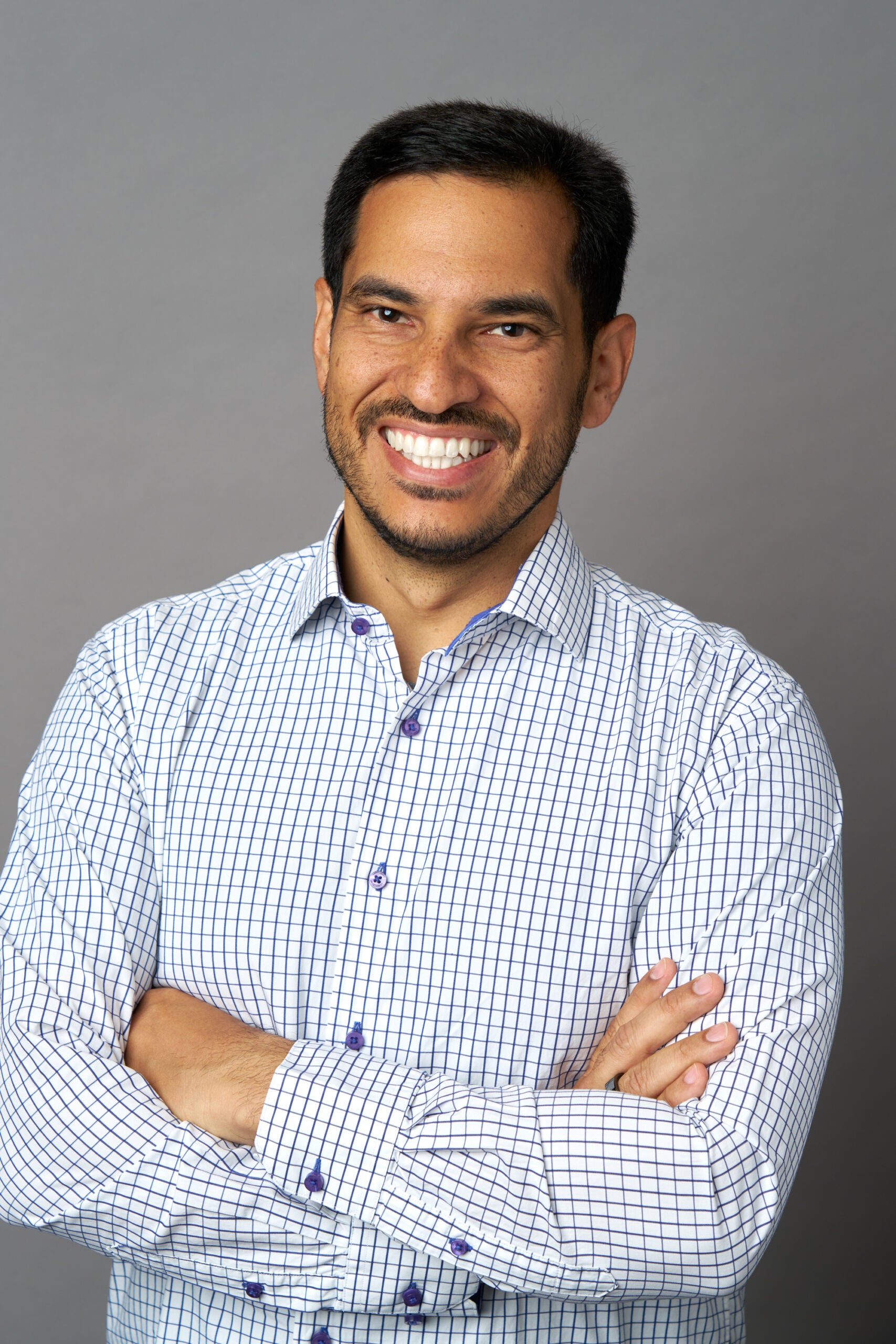
Omar Abou-Sayed
Distinguished Mechanical Engineer
B.S.M.E., University of Texas at Austin, 1998
M.B.A., Harvard University, 2004
I almost wasn’t an engineer.
Despite making me want to grow up and study engineering, it turns out that taking apart my toys as a kid and reassembling them (sometimes with upgrades, sometimes with limb swaps, and sometimes with parts left over) didn’t actually translate to being a good student in, say, Dr. Juricic’s Machine Elements class. The tug, late my second year and into my third, to pull the rip cord and move into the (as yet unnamed) College of Business Administration via the then recently created “Engineering Route to Business” degree, was strong. I had been trading stocks since I was in the 7th grade, which was uncommon in an era where you had to call your broker for stock quotes and trade orders, so there was some rationale for that plan. Ultimately, driven by the birth-order-induced chip-on-my-shoulder common to second born kids, especially those with a particular child-of-immigrants upbringing, I remained in the College of Engineering.
And then, like a switch had been flipped, my grades rebounded. It turns out that my particular brain wiring – ADD with a sprinkle of dyslexia – though not so well attuned to subjects requiring a high degree of detail orientation, is fantastic for integrative subjects commonly found in upper division coursework. Ironically, classes that my classmates dreaded the most, like Dynamic Systems and Controls, turned out to be my easiest. It also turns out that taking your childhood toys apart to improve and rebuild them is actually fantastic preparation for ME366J.
Since graduating, my nearly 30-year career has spanned the globe across a wide variety of engineering, operations, business, and leadership roles. I’ve lived through industry defining moments in the fields where I worked (energy, cleantech, finance). I spent 20 years an entrepreneur, including founding two companies (Advantek and Vaulted Deep) who have been recognized as among the most innovative companies in America. I have given back to my profession through dozens of patents and papers, as a Distinguished Lecturer in my technical society, and as an Adjunct Professor at Rice University. Most importantly, I married my college sweetheart (whom I met as an RA at the Dobie Center), and together we have built a family and a life together.
It has been neither a linear path, nor one without intense moments of stress, uncertainty, and heartbreak. Through it, I learned a few truths. The first is that 80% of life’s satisfaction comes from picking the right partners, at work yes, but especially at home. Get that one decision right and everything else in life is more joyful, less stressful, and more rewarding. The second is that the most satisfying career is one where you do something at the intersection of (1) things you are good at (2) that are valuable to your employers and to society (3) alongside people with whom you build meaningful connections. The last truth is that the journey itself is the destination — tomorrow is not guaranteed — so make sure to enjoy it as you go.
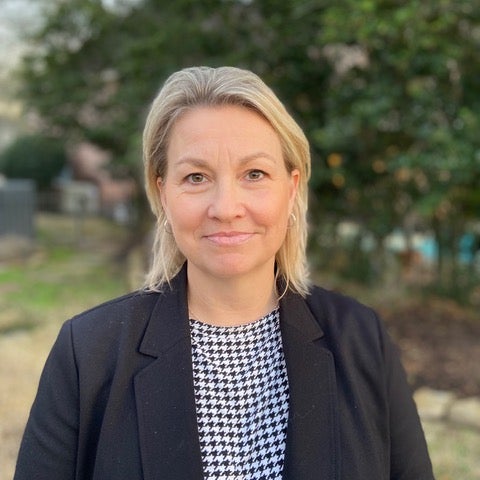
Ginny Garriques
Distinguished Mechanical Engineer
B.S.E.S., Trinity University, 1992
M.S.M.E, University of Texas at Austin, 1999
I was born in New York City, but some of my most formative years were spent far from there. Growing up, I had the opportunity to live abroad, including in Africa and Prague during the late 1970s and early1980s, before settling in Corpus Christi, Texas. Those experiences exposed me early to different people, cultures, and ways of looking at the world. I was also drawn to math and science, interests that eventually led me to study Engineering Science at Trinity University.
Trinity’s small liberal arts environment gave me a broad education, but after graduation I wasn’t certain where my career would lead. I worked for an environmental engineering firm, where I gained valuable experience and, just as importantly, formed a lifelong friendship with the firm’s owner and her husband. That experience taught me something I would see repeatedly throughout my career: the relationships we build along the way can be every bit as important as the work itself.
When I began considering graduate school, I contemplated an MBA but ultimately decided that I wanted to develop greater technical depth. I chose mechanical engineering at The University of Texas at Austin, earning my M.S. while conducting research in thermal-fluid systems as a National Science Foundation Fellow.
A UT career fair introduced me to ExxonMobil. I was impressed by the company’s long history and could envision building a career while continuing to develop both technical and business skills. I joined ExxonMobil in 1999, beginning a journey that would last more than 26 years.
What kept me there was the opportunity to grow. I was continually challenged with difficult problems, given significant responsibility, and trusted to make decisions that mattered. My work took me from deepwater engineering and subsea technology to major projects and operations around the world, and ultimately to senior technical leadership. I retired in 2026 as Chief Engineer for Pipelines, Offshore & Infrastructure.
Some of the people who had the greatest influence on me were mentors who demonstrated that leadership includes helping others succeed. ExxonMobil’s Women’s Leadership Team became an especially important group of colleagues, friends, and mentors. Their example helped shape my own commitment to mentoring, developing engineering talent, and encouraging women and men to pursue and remain in technical careers.
Along the way, I also learned to navigate one of my greatest challenges: pursuing a demanding and rewarding career while being present for my family. I didn’t always find that balance easy, but I learned how to navigate competing priorities and recognize what needed my attention most.
Looking back, my career was not a path I could have mapped out when I was a student. It grew from curiosity, relationships, unexpected opportunities, difficult challenges, and people willing to invest in me. I hope today’s engineering students will give themselves permission not to have every step figured out—and will remain open to the people and opportunities that can take them somewhere they never expected.
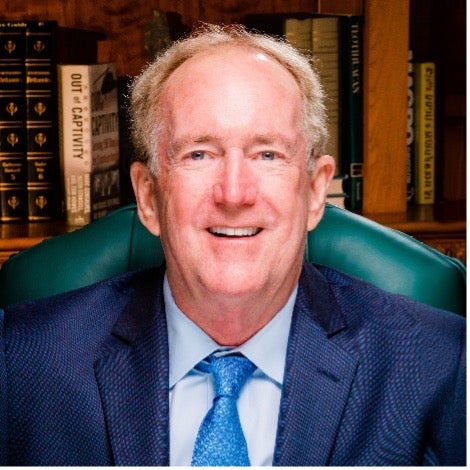
Larry Meador
Mechanical Engineering Hall of Fame
B.S.M.E., University of Texas at Austin, 1970
M.S.M.E., Massachusetts Institute of Technology, 1972
M.S., Management, IT and Knowledge-Based Systems, Massachusetts Institute of Technology, 1974
My education began long before I entered the classroom. Before elementary school, I regularly visited my extended family in Eldorado, Texas, where my grandparents, parents, aunts, uncles, and cousins taught me about West Texas farming and ranching. I was fascinated by cattle, sheep, horses, wild hogs, deer, and turkeys. I also learned one lesson the hard way: getting in front of a stampeding herd of sheep was a very bad idea and not one to be repeated.
In elementary and junior high school, curiosity became a habit. I learned to water ski, began scuba diving, built rockets with recoverable payloads, and discovered that science was enormously fun. I entered science fairs and occasionally won first prizes. My introduction to scuba diving came from Jesse Monk, a Dallas house painter who had served in the Navy’s World War II Underwater Demolition Teams—the “frogmen”, who were the predecessors of today’s Navy SEAL Teams. He opened my eyes to a world far beyond anything I had known.
In high school, I progressed in skiing to slalom, barefoot, trick, and water ski jumping and discovered that applied physics and experimentation could be pure enjoyment. I also learned, rather painfully, that frequently skipping school with friends for water skiing was not particularly helpful to academic progress. But I also learned parachuting on weekends at the Houston Parachute Center while working on a summer construction job. My trainer was the now pioneering and legendary Carlos Gene Wallace, the number six winner of the Gold Wing Award for completing 1,000 jumps.
The University of Texas at Austin changed my life. In the Nuclear Engineering concentration within Mechanical Engineering, I learned something far more important than any single technical subject: I learned how to learn and how to think. I also learned to fly through the Longhorn Aero Club and earned my FAA Private Pilot Certificate at age nineteen. Through the UTA Engineering Coop Program, I worked at Union Carbide’s Houston Engineering Center, and I got a chance to teach computer programming to Union Carbide engineers.
Then Dean John McKetta changed the direction of my life again. He encouraged me to go to MIT for graduate school, with the expectation that I might return to Texas to teach. Instead, MIT opened doors into computing, decision sciences, entrepreneurship, corporate leadership, and eventually national security. My career became a succession of unexpected turns—starting and leading new technology companies, serving as a corporate CIO, working with MIT, and supporting intelligence and defense organizations in laboratories, boardrooms, and operational environments overseas.
Again and again, I found that the most rewarding opportunities came when I was willing to enter territory I did not yet fully understand. Looking back, there was never a master plan. There were great teachers, mentors, risks, mistakes, detours, and opportunities. My foundation was built in Texas—from West Texas ranch country to UT Austin—and the most important lesson has remained the same: stay curious, keep learning, and never be afraid to follow an unexpected path.
David Rigby
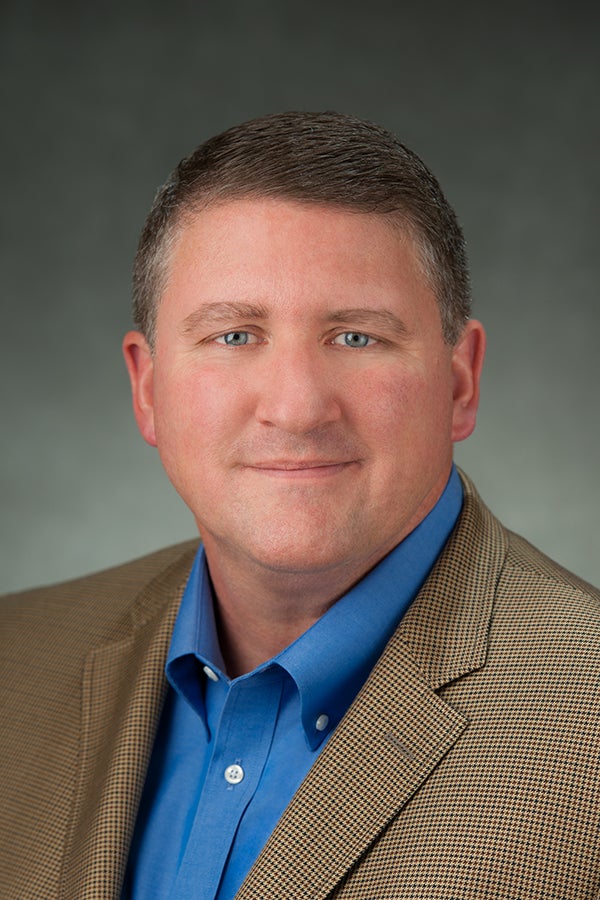
Distinguished Mechanical Engineer
B.S.M.E., University of Texas at Austin, 1986
M.Ed., Adult Education, University of Houston, 2007
I love rockets, and have since I was growing up. While I dreamed of being an astronaut, I was blessed with height that well exceeds the United States’ 95th percentile height for adult men (6 feet 2 inches) and the cutoff for astronauts. So it seemed only natural that I spent my career pursuing my passion in rockets deeply rooted on the ground.
The sheer power created in a controlled explosion to lift astronauts and payloads into low Earth orbit, or beyond into lunar and inter-planetary travel, is nothing short of phenomenal. To be able to witness and literally feel the vibrations of thrust as launch vehicles such as the Space Shuttle lift off from Kennedy Space Center is life changing. But given the hazards and criticality involved in rockets, especially rocket propulsion, it has given me a deep respect for what it means to be wrong: safety of product is paramount to success.
I have had the opportunity to work on a variety of space vehicles: Space Shuttle, Ares, and Artemis. Upon graduation from The University of Texas at Austin, I worked as a spaceflight controller at NASA-Johnson Space Center’s Mission Control as part of the return to flight team from the Challenger accident. I eventually became the Space Shuttle Main Propulsion Sub-System Manager, leading that team through the Columbia accident and return to flight until the end of the Space Shuttle program. Next, I became the Ares 1 Upper Stage Main Propulsion Integrated Product Team Leader. As that program transitioned into Space Launch System and now Artemis, I became the Propulsion Integrated Product Team Leader through the development of the Core Stage and Upper Stage. Artemis travelled around the moon in 2026; lunar landing is on the horizon in 2028.
After the NASA program experiences, I transitioned to work on rockets of a different kind: missiles. I have worked on the Aegis, Arrow, Avenger, and Ground Based Strategic Deterrent Programs. Today, I am the Production Program Manager for Patriot PAC-3 Seeker Program. This ground-based interceptor missile is protecting US and allied forces, and in some cases the public, from incoming missile attacks throughout the world every day.
I graduated from The University of Texas at Austin with a Bachelor’s Degree in Mechanical Engineering in 1987, The University of Houston – Clear Lake with a Master of Arts in adult education in 1992, and have additional graduate level education in psychology and organizational communication. I found in my career the key to overcome technical roadblocks and achieve team success is built on the ability to engage with teams; education and intentional practice are the only way to build those skills.
To me, the mission has always mattered most. No matter where my career has taken me, I have been challenged by the mission that is bigger than me: human spaceflight, protecting the warfighter, protecting the public. It’s what excites me and drives me to be successful. Sometimes, rocket fire and smoke is just the icing on the cake.
S.V. Sreenivasan
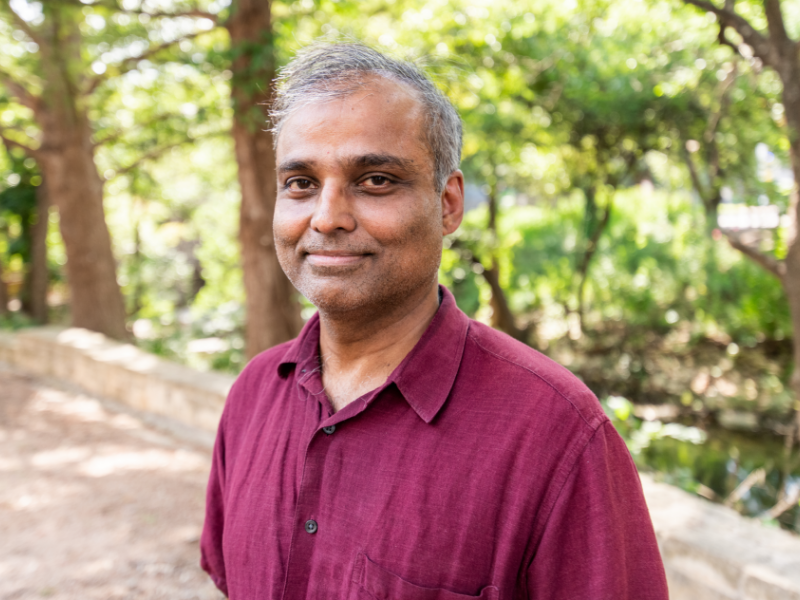
Honorary Mechanical Engineer
B.S.M.E., National Institute of Technology at Trichy (India), 1987
Ph.D., Ohio State University, 1994
S.V. Sreenivasan is a leading expert in semiconductor manufacturing and advanced nanomanufacturing, with a career focused on developing scalable fabrication technologies for next-generation electronics. He is the founder and chief technology officer of Texas Institute for Electronics (TIE), a UT Austin-sponsored public-private partnership focused on advanced semiconductor heterogeneous integration. Founded in 2021, TIE recently received more than $550 million in funding to advance its vision and build out its semiconductor fabrication infrastructure.
Sreenivasan also serves as the Cockrell Family Regents Chair Professor #7 in Engineering at The University of Texas at Austin and directs the NASCENT Center, a National Science Foundation-funded Nanosystems Engineering Research Center focused on high-throughput nanomanufacturing systems for future generations of mobile computing and energy technologies. His research interests include silicon systems for artificial intelligence hardware, heterogeneous systems for defense electronics, advanced displays and healthcare technologies. He has published more than 130 technical articles and holds more than 100 U.S. patents.
An entrepreneur as well as a researcher, Sreenivasan co-founded Molecular Imprints Inc. (MII), a UT Austin spinout focused on nanopatterning technology. Following Canon Corporation’s acquisition of MII’s semiconductor business in 2014, he became chief technologist of Canon Nanotechnologies Inc., where he continues to advance nanopatterning technologies. MII’s technology is also being commercialized in areas including displays and data storage.
Sreenivasan’s contributions to engineering and technology have earned numerous honors, including the World Economic Forum’s Technology Pioneer Award (2005), the UT Austin Inventor of the Year Award (2012), election as a Fellow of the National Academy of Inventors (2016) and ASME (2020), and election to the National Academy of Engineering (2021).