2004 Academy of Distinguished Alumni Announced
The Walker Department of Mechanical Engineering has announced the 2004 honorees of its Academy of Distinguished Alumni.
As a way of recognizing the accomplishments and careers of our outstanding alumni, the Walker Department of Mechanical Engineering established the Academy of Distinguished Alumni in 2004. The Academy’s purpose is to recognize high-achieving mechanical engineers from among the UT Austin community and from the engineering community at large, to champion the mechanical engineering profession and to build a strong community and facilitate interactions among our students, faculty, alumni and corporate partners.
This year’s honorees include:
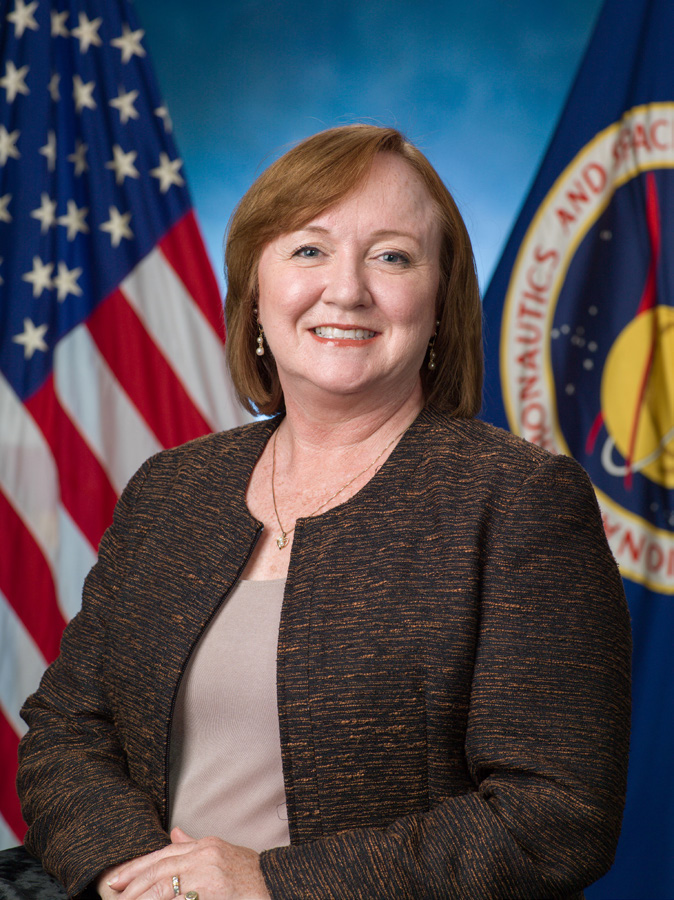
Kim Ess
Distinguished Mechanical Engineer
BSME, The University of Texas at Austin, 1987
Kim Maureen Ess (Miller) was born into a military family in San Antonio, Texas in 1963. Her father had a career in the U.S. Army and in the Special Forces before retiring and becoming a special-needs shop teacher in San Antonio while her mother took care of the family full-time. After moving eleven times across the U.S., Panama and Germany, her family ended up in Cibolo, Texas where she graduated from Samuel Clemens High School in 1982.
She enrolled in the Fall of 1982 at The University of Texas at Austin to study mechanical engineering. She entered the Co-Operative Engineering Program and worked four semesters with Ingersoll-Rand, three in Houston, Texas and the summer of 1986 at the Ingersoll-Rand gas compressor plant in Manchester, England. While at UT, she was secretary of the Society of Women Engineers (SWE), president of the American Society of Mechanical Engineers (ASME) and a member of the Order of Alec. Some of her fondest memories were in Eastwood’s park at the ASME events.
She graduated May, 1987, and began her career in Houston, Texas at the NASA-Johnson Space Center working as a design engineer in the engineering mockup and training facility. After gaining experience as a designer and project engineer of Space Shuttle equipment used in engineering evaluations and astronaut training, she became the manager of the space station mockup and engineering facility in 1990. In 1994, she transferred into the Flight Systems Branch, and was the subsystem manager of the Tools, Diagnostic Equipment, and Mobility Aids for the Space Shuttle and Space Station Programs. She became the team lead for all astronaut equipment in 1998. She was selected to be a flight crew equipment technical manager in the Space Shuttle Orbiter Project Office in 2001.
Following the Columbia accident in 2003, she managed a critical return-to-flight project that inspected the orbiter thermal protection system prior to re-entry. She transferred to Langley Research Center in Virginia in 2007, and led the test and verification activities for the NASA Orion Launch Abort System. In 2009 she spent six months at the Kennedy Space Center in Florida processing the Space Shuttle and then returned to Johnson Space Center in the Orion Project Office. Revisiting her engineering roots in 2012, she became project manager on systems ranging from a robotically-assembled telescope to robotic lunar landers. She currently manages the NASA Exploration Mission Planning Office, performing end-to-end mission analysis, and providing spacecraft vehicle integration expertise and tools to assess missions, vehicle design concepts, and system performance.
Outside of work, she enjoys volunteering at local schools and charities and spending time with her family and loveable golden retriever.
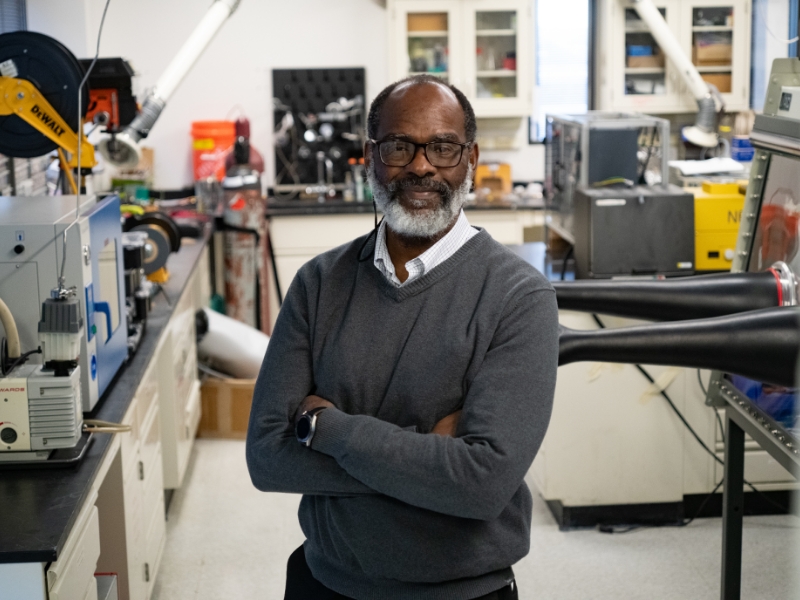
Ofodike Ezekoye
Honorary Mechanical Engineer
BSME, University of Pennsylvania, 1987
MSME, University of California, Berkeley, 1989
Ph.D., University of California, Berkeley, 1991
Ofodike Ezekoye was born in Ohio and spent his early childhood years in Nigeria. DK, as he is known to his friends and colleagues, moved back to the U.S. to begin elementary school in Pittsburgh, Pennsylvania. He considers Pittsburgh his hometown, having lived there through his high school graduation. DK learned about engineering from his father, who spent his mechanical engineering career working in Pittsburgh for Rockwell International and later Westinghouse Electric. DK enrolled at the University of Pennsylvania in Philadelphia, Pennsylvania in 1983 and majored in mechanical engineering. He graduated Magna Cum Laude in 1987 and was awarded the Ralph Teetor award in Mechanical Engineering and Applied Mechanics (MEAM). The award is given to the graduating senior in MEAM who in the opinion of the faculty “demonstrated the qualities of ingenuity, creativity, scholarship, and service”. He attended the University of California at Berkeley for graduate school and received his MS in 1989 and Ph.D. in 1991. After completing his Ph.D. he was awarded a National Research Council Postdoctoral fellowship to conduct research in the Building and Fire Research Lab at the National Institute of Standards and Technology in Gaithersburg, Maryland.
DK joined the UT Austin Department of Mechanical Engineering faculty in January of 1993 in the Thermal Fluid Systems (TFS) Area. As an assistant professor, he was awarded the Ralph Teetor Educational Award from SAE (1997), the College of Engineering Faculty Excellence Award (1998), 3M Faculty fellowship (1997), Haliburton Foundation Award of Excellence, and National Science Foundation Early Career Award (CAREER). He was promoted to associate professor in 1998. In addition to his research and teaching duties, he served as the faculty advisor to the National Society of Black Engineers from 1994-2003. In 2003, DK cofounded the UT Student Chapter of the Society of Fire Protection Engineers to provide a professional chapter experience for UT students interested in working on fire problems. He received a Student Engineering Council Faculty Appreciation Award in 2003 in recognition of his commitment to teaching. He was promoted to the rank of professor in 2005.
Since 2005, he has served the department as graduate advisor and TFS Area Coordinator. DK has served ASME as a technical committee chair and journal associate editor; he became an ASME Fellow in 2006. DK has supervised or co-supervised over 20 Ph.D. students and more than 35 MS students. He and his students and collaborators have published over 200 journal and conference papers on fire, heat transfer, aerosol dynamics, and combustion. As a team, he and his students have won several awards, including the NFPA Bigglestone best paper award for fire communication. His research interests include experimental and computational characterizations of fire and fire tactics, modeling probability density function evolution, and heat transfer in high temperature systems. DK and his wife live in Austin with their teenage children.
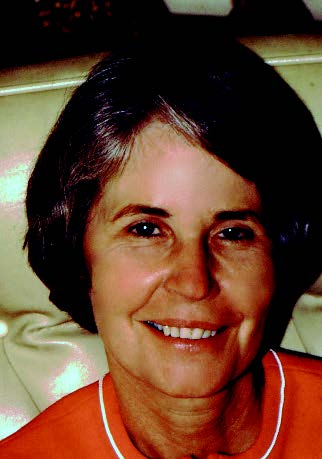
Mary Jo Knobelsdorf
Mechanical Engineering Hall of Fame
BSME, The University of Texas at Austin, 1952
Mary Jo (Ross) Knobelsdorf graduated from high school in Crockett, Texas in June 1948, befor enrolling at The University of Texas. She graduated from UT in August 1952 with a BSME and went to work in Houston in the metallurgy department at Cameron Iron Works, in charge of the Spectrometer Laboratory. Her primary responsibility was to provide rapid analysis of the steel alloys while in the molten state and alloys were being added to the melt.
During World War II, women were first actively recruited for engineering. Mary Jo was the first female student to earn a BSME at UT. The second was her sister, Bertha (Ross) Powledge in 1953. During the Professional Orientation course her first semester, a lecturer said, “Count yourself and the next 9 students in your row. Three will graduate in engineering; seven will either change your major or drop out.” She assumed that she would be one of the seven. She was a 16-year-old girl and no girl had earned a BSME. When she passed Dynamics as a sophomore, Dean Woolrich’s secretary won a steak dinner from her instructor, who had said a woman could not comprehend acceleration analysis. Her favorite classes were Metallurgy and Machine Design. Though the years, Mary Jo looked back on her days at UT and her fondest memory was that she was succeeding: going from freshman to sophomore to junior to senior to graduation.
In April 1953, she married an ME classmate, John Knobelsdorf, who worked for the Babcock and Wilcox Company in Houston. B&W moved the Knobelsdorf’s to San Antonio in 1957. When their two sons started school, Mary Jo earned a Masters in mathematics from Trinity University, and taught mathematics at San Antonio College. Teaching matched the boys’ school hours and summers were free! When B&W moved them back to Houston in 1963, she continued teaching mathematics at South Texas Junior College. She co-authored three Algebra Outline and Exercise Books published by Charles E. Merrill.
When the college got a computer, IBM offered FORTRAN classes to instructors. Learning and teaching FORTRAN was her path to college administration. In the 1970’s, she became Dean of Admissions and Records at the junior college, which became Univ. of Houston – Downtown, and then Coordinator of Computer Services at the Houston campus of Texas Women’s University. Retiring in the late 1980’s, she wrote computer manuals for an Austin software company.
Always an engineer at heart, she learned that the knowledge and confidence gained during those four years at UT made her realized that she could do anything; all she had to do was try.
Robert Leibrock
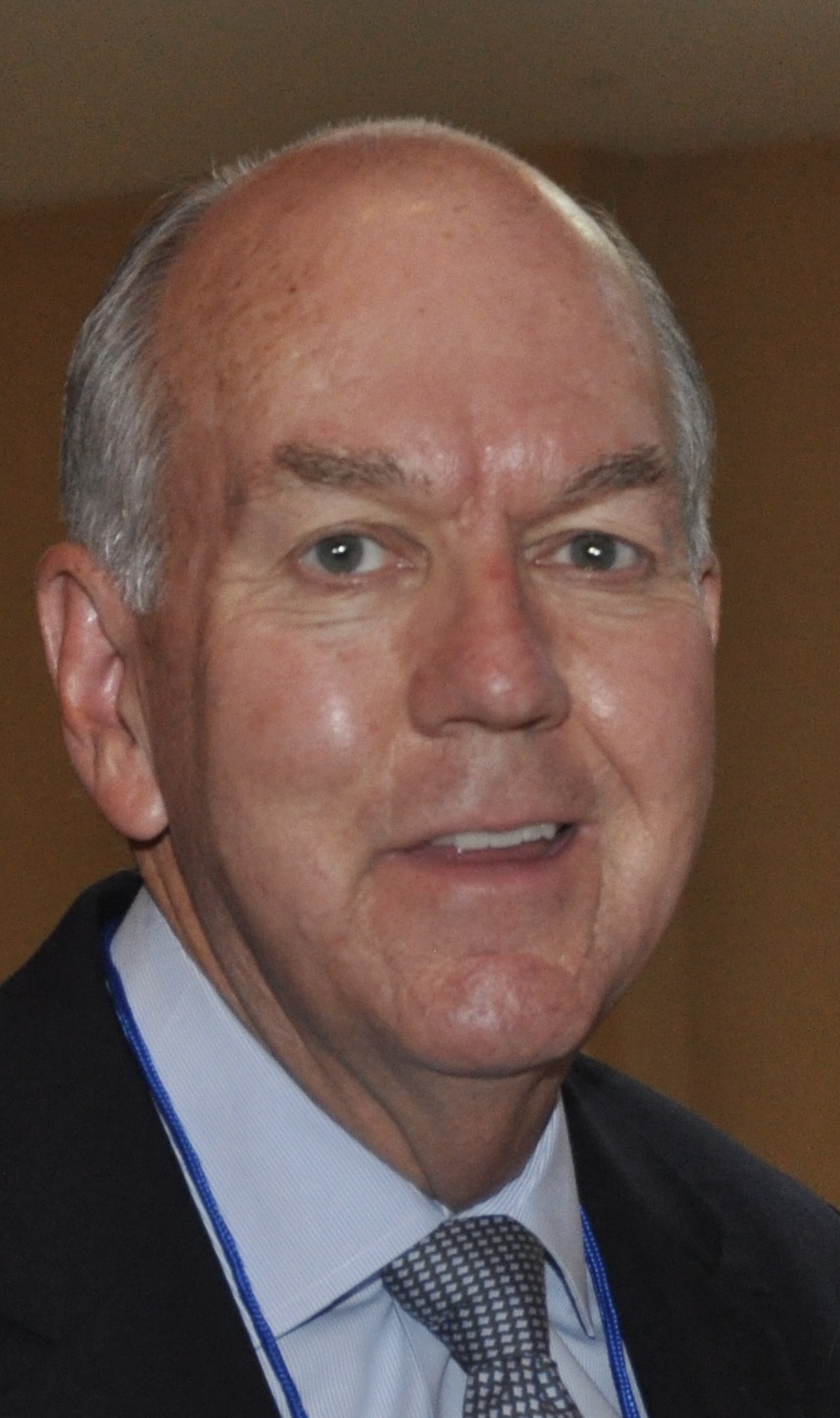
Distinguished Mechanical Engineer
BSME, The University of Texas at Austin, 1970
MBA, The University of Texas at Austin, 1972
Robert C. (Bob) Leibrock began his oil and gas industry career as a construction engineer, including startup operations for the Trans-Alaska Pipeline System (1977). As general partner of Amerind Oil Company, Ltd., beginning in 1981, Bob planned and managed exploration, drilling, completion and production operations in numerous fields in the Permian Basin and in other areas. He directed an extension of the Northeast Lovington oil field, which resulted in Amerind ranking among the top 25 oil producers in New Mexico for several years.
He is actively involved in oil and gas investments in several areas, including Australia. He served as a director of Ortloff Engineers, Ltd., world leader in proprietary gas processing technologies.
Bob has maintained a deep connection to the Cockrell School of Engineering and has supported it in a variety of capacities, including as a member of the Mechanical Engineering External Advisory Committee beginning in 1996 and the Engineering Advisory Board in 1999. He is a Friend of Alec Legacy Donor and a contributor to the Department of Mechanical Engineering’s T-Room renovation. Bob and his wife, Pam, provided the lead gift for the Dr. Joseph Beaman Graduate Fellowship in Mechanical Engineering in 2014. The endowment honors Joseph J. Beaman, Jr., Sc.D., P.E., an undergraduate classmate of Bob’s.
Bob was honored as a recipient of the 2009 Distinguished Graduate Award from the Cockrell School, and he was mentored by three other Distinguished Alumni of the Cockrell School: Robert M. Leibrock, P.E. (father); Arlen L. Edgar, P.E.; and Keys Curry, Jr., MSME.
He has served in board positions and other leadership roles for many professional, church and civic organizations, including the Permian Basin Petroleum Museum, Permian Basin Petroleum Pioneers, Society of Petroleum Engineers, Society of Independent Professional Earth Scientists, Abell-Hanger Foundation, Midland Men’s Community Bible Study, and the Texas Interscholastic League Foundation, where he and Pam contributed the Leibrock Family Scholarship.
Bob and his wife, Pam, reside in Fort Worth. They have two married daughters and a grandson.
Patrick Barry Niland
Mechanical Engineering Hall of Fame
BSME, The University of Texas at Austin, 1940
Patrick Barry Niland, a Galveston, Texas native, earned a Mechanical Engineering degree from UT Austin in 1940. He was on active duty as an officer in the U.S. Naval Reserve during WWII. Mr. Niland had many hobbies and interests centered on his large family and many friends, and a very diverse career path — highlighting that a Mechanical Engineering degree from The University of Texas prepares you to be successful in various careers.
After WWII, he and a partner created a firm, Nichols & Niland, consultant engineers and manufacturing agents in Houston, Texas. In 1947, after leaving the partnership, he began a 30-year career with Ford Motor Company of Michigan, entering as a project engineer and rising to several senior managerial positions, ultimately General Manufacturing Manager / Western Hemisphere at world headquarters for Ford Tractor, with seven plants reporting to his office – five in the U.S., one each in Mexico and Brazil.
After retiring from Ford, Barry worked for seven years as a self-employed real estate agent and investor in Birmingham, Michigan. He moved to Austin in 1984 where he served as Treasurer and member of the Board of Directors for Pharmaco Dynamics Research, a contract research organization providing clinical research services to large pharmaceutical companies. He was also Pharmaco’s Facilities Director for all new building projects until he retired in earnest in 1992 at age 74.
In 1992, he and his wife, Betty, sold their Austin, Texas home and bought a new motor home and small station wagon and spent almost three years traveling coast to coast, Gulf of Mexico to Canada several times visiting children in Boston, Rochester, N.Y., Seattle, San Antonio, and Austin as they explored our country. When they tired of traveling, they landed back in Austin, Texas and built a new home.
Jerri Paul

Outstanding Young Mechanical Engineer
BSME, The University of Texas at Austin, 1995
MSMSE, The University of Texas at Austin, 1997
MBA, The University of Texas at Austin, 1997
Jerri Paul was born in Clovis and grew up in New Mexico’s rural agricultural communities, where she participated in 4-H and FFA. In grade school, her math teacher encouraged Jerri’s mom to support her interests in math and science. During high school, Jerri participated in the Introduction to Engineering summer program at Notre Dame University, which cemented her career aspirations.
Jerri transferred from community college into The University of Texas at Austin to study mechanical engineering. She was awarded the Nina M. Woolrich Endowed Presidential Scholarship and was accepted into the Applied Research Labs (ARL) Honors Scholars Program. Jerri had summer internships at Ford’s design center in Dearborn, Michigan and at ARL. During the school year, she worked as an assistant in the turbine engine lab, lab instructor, IC2 Institute and the Austin Technology Incubator. She was also active in student organizations (ASME, Pi Tau Sigma, Tau Beta Pi, SAE, SWE). Jerri was recognized for her student contributions with the inaugural UT ME Student Leadership Award in 1995.
Upon receiving her BSME (1995), Jerri received an appointment to an International Atomic Energy Agency program as a research assistant in Cadarache, France to conduct nuclear reactor core modeling. Afterwards, she returned to UT to complete her MS in manufacturing systems engineering and MBA in operations management while working full time and conducting her thesis research. In June 1997, Jerri began working as a design engineer at Ford Motor Company, where she completed a leadership program working in Chassis Engineering, Powertrain Engineering, Manufacturing Engineering, and Lincoln Marketing. In 1999, she accepted a position as manufacturing engineer representing the Jaguar S-type. In 2000, she transferred to Jaguar’s Coventry, England facility working in vehicle engineering for the Jaguar F-type. Jerri led Ford’s UT engineering recruiting team, which was recognized by Ford in 2000 and by UT in 2001.
In 2002, Jerri returned to central Texas to work with angel investors, entrepreneurs and start-ups. She was recruited as president and CEO of a start-up software company providing an electronic healthcare records solution, where she executed a turn-around leading to the sale of the company. In 2007, Jerri joined Dell, Inc., where she led a Federal Compliance Program, a Business Architecture Team, and acquisition integrations. She is currently a director, IT enterprise architecture & strategy, working as a lead on the Dell EMC Integration.
Throughout her career, Jerri has embraced giving back through her support of local non-profits, Texas Exes, and Friends of Alec. In 1999, she endowed a scholarship focused on women in mechanical engineering. She served four years on the UT ME External Advisory Committee and was the first woman chairperson. Since 2004, Jerri has served on the UT Engineering Advisory Board (EAB), chairing a diversity committee and establishing the annual UT Women Changing the World event. She advises engineering department chairs on issues related to recruiting and retaining women faculty and students, including the 35-in-5 Women in ME (later renamed Elevate ME) effort. Jerri has led efforts to establish the governance framework for the ME Academy for Distinguished Alumni. She presents at technical conferences and has published papers in technical journals. Jerri enjoys living in Austin, supporting local arts and live music, participating in public policy discussions, and traveling internationally.
Karen Thole
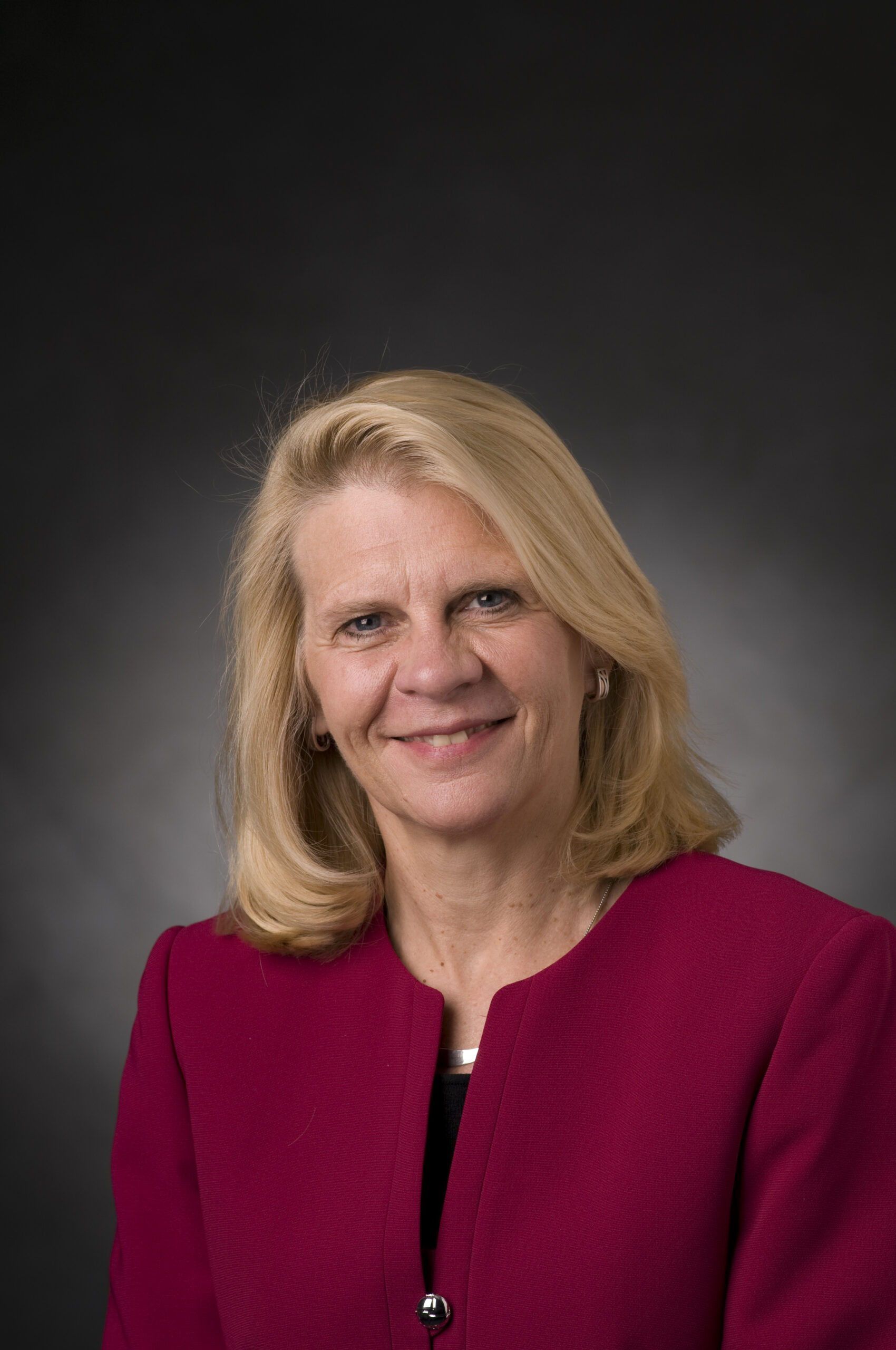
Distinguished Mechanical Engineer
BSME, University of Illinois Urbana-Champaign, 1982
MSME, University of Illinois Urbana-Champaign, 1984
Ph.D., The University of Texas at Austin, 1992
Karen A. Thole has spent her career in academia touching the lives of students, leading turbine heat transfer research, and being a role model for women in STEM. Dr. Thole has served as the head of the Department of Mechanical and Nuclear Engineering at Pennsylvania State University since 2006. She also holds the title of distinguished professor at Penn State. She holds two degrees in Mechanical Engineering from the University of Illinois at Urbana-Champaign, and a Ph.D. from The University of Texas at Austin. After receiving her Ph.D., she spent two years as a post-doctoral researcher at the Institute for Thermal Turbomachinery at the Karlsruhe Institute of Technology in Germany. Her academic career began in 1994 as an assistant professor at the University of Wisconsin-Madison. In 1999, she accepted a position in the Mechanical Engineering Department at Virginia Polytechnic Institute and State University, where she was promoted to professor in 2003, and was recognized as the William S. Cross Professor of Mechanical Engineering in 2005.
At Penn State, Dr. Thole founded two laboratories: the Experimental Computational Convection Lab (ExCCL) and the Steady Thermal Aero Research Turbine (START) facility, where she is currently the director. These labs provided the foundation for Penn State being awarded a center of excellence in turbine heat transfer for a major turbine manufacturer. She has published over 200 archival papers and advised 70 dissertations and theses. She and her students have been recognized numerous times by ASME with best paper and best presentation awards.
Dr. Thole has provided service leadership to numerous organizations, including being a member of ASME’s Board of Governors, who are chosen from 130,000 members to oversee ASME’s affairs, holding full control of the activities of the society. She has also served as the chair of the Board of Directors for the ASME’s International Gas Turbine Institute, where she led a number of initiatives to promote communities of women engineers and students. She is a member of NASA’s National Aeronautics Committee, and co-chaired a National Academy of Engineering study on low carbon aviation. She also chaired ASME’s Mechanical Engineering Department Head Executive Committee and participated in the Vision 2030 Committee defining the future mechanical engineering curriculum. She has served on academic advisory boards at The University of Texas, University of Illinois, Georgia Institute of Technology, and Brigham Young University.
In her roles as an educator, researcher, and mentor, Dr. Thole has received numerous awards, including being recognized by the United States White House as a Champion of Change for STEM for founding the Engineering Ambassador Network in which engineering students, most of whom are female and other underrepresented students, speak to high school students on the ways in which engineers positively impact the health, happiness, and safety of our world. For her administrative contributions, she has been recognized by Penn State’s Rosemary Schraer Mentoring Award and Howard B. Palmer Faculty Mentoring Award. She was recognized in 2014 by the Society of Women Engineers Distinguished Engineering Educator Award and in 2016 by ASME’s Edwin F. Church Medal. In September 2015, she earned the George Westinghouse Medal from ASME, which recognizes eminent achievement of distinguished service in the power field of mechanical engineering.
Ryan Thompson

Outstanding Young Mechanical Engineer
BSME, The University of Texas at Austin, 2003
MSME, The University of Texas at Austin, 2006
Ryan Thompson was born in Topeka, Kansas, and lived in North Central Kansas until his freshman year of high school. His family moved to the Austin, Texas area and he graduated from Leander High School in 1990. After high school, Ryan enlisted in the United States Navy and worked in the Naval Nuclear Propulsion Program. After boot camp, he attended Nuclear Power School in Orlando, Florida, and Nuclear Prototype training in Windsor, Connecticut. After completing his training, he served as a maintenance leading petty officer on the nuclear carrier U.S.S. Enterprise, based in Norfolk, Virginia, until honorably discharged in 1996.
Upon returning to Austin, Ryan enrolled in The University of Texas at Austin to pursue a mechanical engineering career. In 1998 he joined the staff of Utilities and Energy Management as a maintenance mechanic, working on the turbine generators, boilers, and associated equipment at the Hal C. Weaver Power Plant. Working full-time, Ryan completed his bachelor’s degree in Mechanical Engineering in 2003. At this time, Ryan was promoted to a management position and began to oversee the maintenance operations at the power plant. Ryan continued his engineering education at the university, graduating with a master’s degree in 2006.
During his career in the Department of Utilities and Energy Management, Ryan has been part of the design, construction, and operation of several critical infrastructure projects that have made the University’s Carl J. Eckhardt Combined Heating and Power Complex internationally-renowned for operations and efficiency. These projects include a new gas turbine generator installation, two new chilling stations, two thermal energy storage tanks, and underground thermal distribution systems serving the Dell Medical District. Aside from utilities-related projects, his day-to-day duties include the management of maintenance operations at the Main Campus and Pickle Research Campus power and chilling plants.
Ryan is a member of the Association of Energy Engineers and the International District Energy Association. He is also an adjunct professor at Austin Community College, teaching in the Electronics and Advanced Technologies Department. Throughout his career, Ryan has supported the ME department by giving plant tours and as a guest lecturer for the benefit of engineering students.