2015 Academy of Distinguished Alumni Announced
The Walker Department of Mechanical Engineering has announced the 2015 honorees of its Academy of Distinguished Alumni.
As a way of recognizing the accomplishments and careers of our outstanding alumni, the Walker Department of Mechanical Engineering established the Academy of Distinguished Alumni in 2004. The Academy’s purpose is to recognize high-achieving mechanical engineers from among the UT Austin community and from the engineering community at large, to champion the mechanical engineering profession and to build a strong community and facilitate interactions among our students, faculty, alumni and corporate partners.
This year’s honorees include:
Julio Guerrero
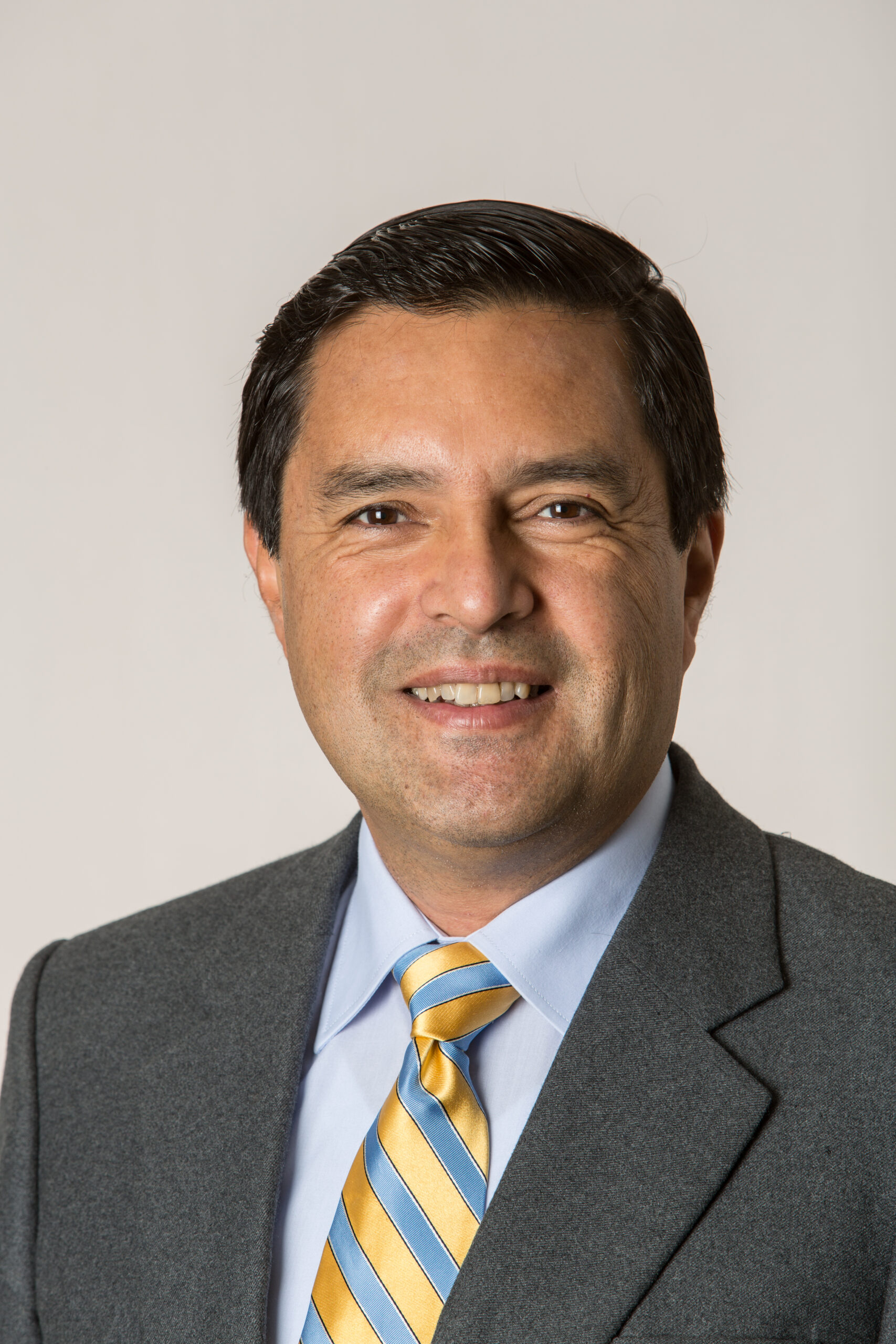
Distinguished Mechanical Engineer
MSME, The University of Texas at Austin, 1995
Ph.D., Mechanical Engineering, 1998
I think Life is beautiful, and engineers make Life more beautiful than it already is. Two of the things that make us humans are that we can love and we can create. Engineering is connected to one of those two things, the ability to create. I love engineering with passion, and I want to inspire millions of young students and engineers worldwide to feel the way I do about life and our profession.
The Mechanical Engineering Department at The University of Texas at Austin is one of the organizations that has influenced and inspired me the most to feel this way about life and my profession. UT Austin’s ME faculty members’ passion for our profession, teaching, and researching has inspired thousands of students and engineers like myself around the world, and it continues to do it. Globalization is part of my daily life, both professionally and personally. My fluency in several languages, my experience working with corporations and academia in research and product development on four continents, and working with people from more than 50 nationalities, give me a unique perspective to assess the impact that UT Austin ME and my advisor Dr. Delbert Tesar have had, and continue to have in Mechanical Engineering worldwide. I grew up and lived in Lima-Perú until I was 28 years old.
Things that inspired me to be an engineer: the man landing on the moon in 1969; visiting when I was a child with my father the highest train in the world—Infiernillo in Perú— as well as the Hydroelectric plants in the Andes—Mantaro; and visiting SIMA, the largest Peruvian shipyard in Callao-Peru, with my high school class when I was 12 years old. Life is beautiful; I have worked as an engineer in organizations related to all those technologies.
I now work for Exponent. I assist and guide corporations globally with their technology development needs. I have worked in research and development (R&D) and business development in Draper Laboratory in Cambridge, Massachusetts; Schlumberger Research (SLB) in Houston, Texas and Cambridge, Massachusetts; and FIAT-IVECO in Torino, Italy. My technical expertise includes analyzing, designing, and developing mechanical systems, including those for harsh and extreme conditions. I am an owner of over 20 mechanical system patents worldwide. I earned my master’s and Ph.D. degrees from The University of Texas at Austin and was awarded the honorary doctoral degree from Universidad Nacional de Ingeniería in Lima-Peru in 2015. In 2014, I became a member of the Pan-American Academy of Engineering (32 countries). I was the 2015-2016 president of the American Society of Mechanical Engineers (ASME), an organization of almost 140,000 engineers in 150 countries.
I have also collaborated with professors and graduate students and lectured in engineering at MIT. At SLB, I established numerous research collaborations with professors and students from universities and research centers around the world and led the 2,400-member SLB/Eureka Mechanical Engineering Community in 3 continents for 5 years. I love skiing and swimming, history, economics, and Renaissance Italian art.
J. Parker Lamb
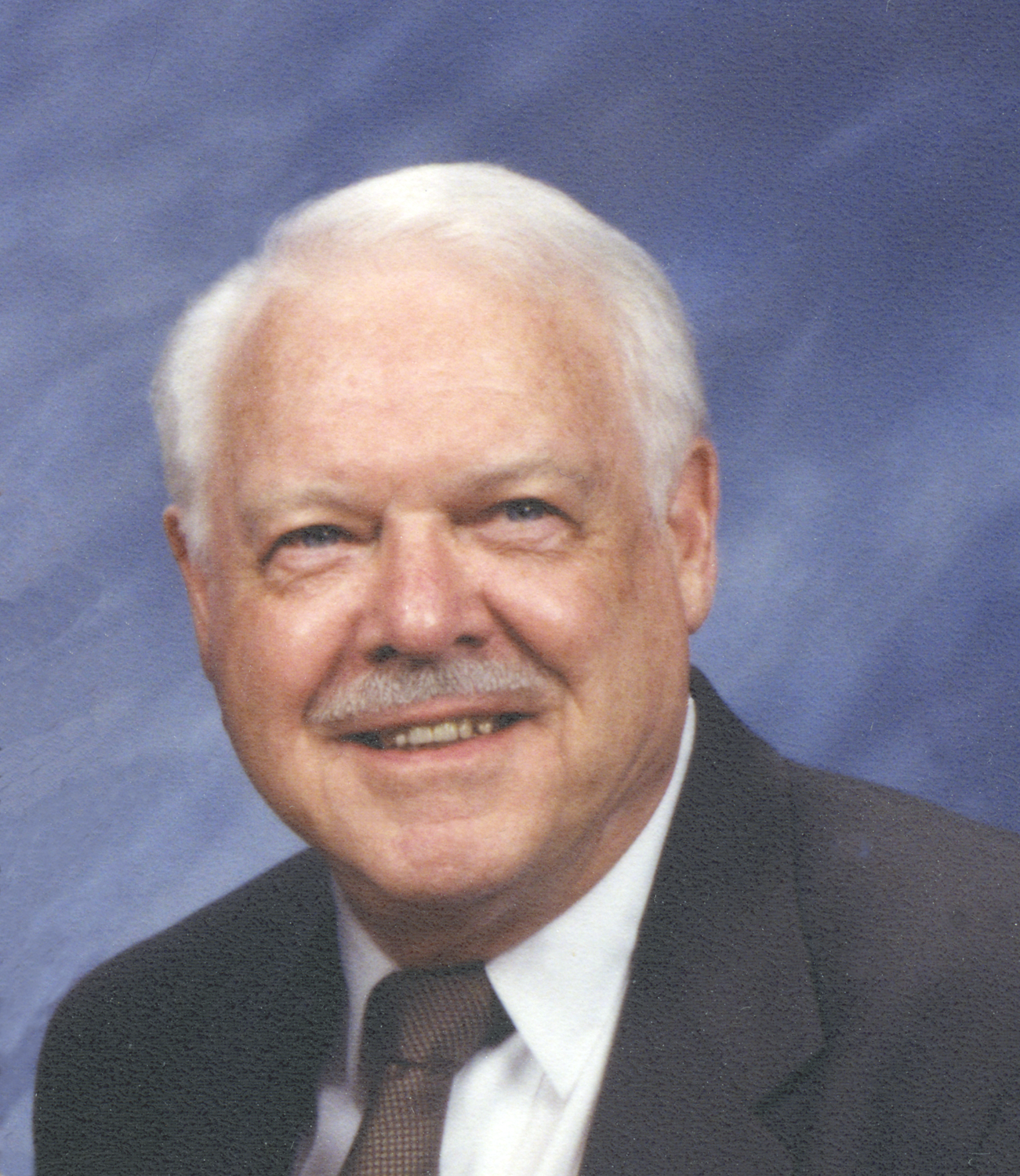
Honorary Mechanical Engineer
BSME, Auburn University, 1954
MSME, University of Illinois at Urbana, 1958
Ph.D., University of Illinois at Urbana, 1961
A native of Alabama, Parker Lamb grew up in Meridian, Mississippi during World War II, graduating from high school in 1951. After receiving a BS degree in mechanical engineering from Auburn University, he served as an Air Force officer from 1955-57 in Dayton, Ohio. He then enrolled in the University of Illinois (Urbana) in September 1957 where he received MS (1958) and Ph.D. degrees (June 1961).
After completion of his graduate studies, he moved to Raleigh, North Carolina as an assistant professor of engineering mechanics at North Carolina State University. He moved to the Department of Mechanical Engineering of The University of Texas at Austin in 1963 at the same rank. With many of the ME faculty approaching retirement, he was soon asked to assume administrative duties, beginning in 1965 as director of graduate student programs (graduate advisor).
In 1970 he was appointed chair of the Department of Mechanical Engineering and served for 6 years, after which time he became associate dean of engineering for academic affairs. Four years later he was appointed chair of the Department of Aerospace Engineering & Engineering Mechanics, and served there for 7 years (1988). He then returned to the ME faculty in a purely teaching/research role. However, external circumstances resulted in his resumption of the chairmanship in 1996 on an ad interim basis, which was made a regular appointment from 1997-2001.
Recognizing the importance of practical experience as well as his role as ambassador for UT engineering, Parker participated in a wide range of off-campus activities during his career in Austin. These included a trip in June 1974 to Sao Paulo, Brazil, where he served as an advisor to the mechanical engineering program in their Ecole Polytechnic. As a result of UT’s national role, he also was a member (1976-78) of the New York-based National Fund for Minority Engineering Students. Within Texas, he had a major role in developing UT’s first minority engineering program at UT Pan American in Edinburg, Texas between 1992-94. In 1995-96, he was a consultant in the startup of an engineering program at UT Tyler.
His off-campus technical work included stints at Vought Aircraft in Ft. Worth, US Air Force Arnold Research Center in Tennessee, and the Sandia National Laboratory in Albuquerque, NM, where he collaborated with one of his early graduate students who had also taught briefly at UT.
Parker’s 38-year career at UT Austin ended with his retirement in February 2001.
Carl Langner
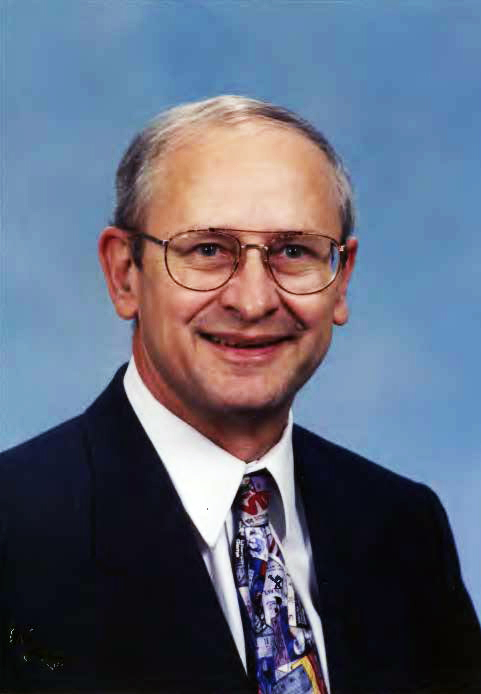
Distinguished Mechanical Engineer
BSME, The University of Texas at Austin, 1960
MSME, Rice University, 1963
Ph.D., University of Florida, 1973
Carl Langner was born in Brownsville, Texas. After his father died, Carl grew up in Seguin, graduating from Seguin High School in 1956. He was already inventive in his teens, known about town for his shocking machines and motorized bikes and scooters, etc.
Carl attended Texas Lutheran College in Seguin for two years, then transferred to The University of Texas at Austin, where he graduated with a BS degree in mechanical engineering in 1960. His fondest memory at Texas was designing and building a solar furnace that boiled water as it tracked the sun, and which resided on the roof of Taylor Hall for decades afterward.
Carl graduated from Rice University with a MS in ME in 1963, and from the University of Florida with a Ph.D. in Engineering Mechanics in 1973. His MS thesis involved numerical analysis of stress waves in solids, and his Ph.D. dissertation presented a new theory of plasticity for metals.
Carl’s work experiences started at Southwest Research Institute in the early ’60s, where his projects included blast effects on re-entry ICBMs and anti-slosh baffles for the Saturn Five Rocket that carried the astronauts to the moon.
Carl’s career was primarily in the offshore petroleum industry, where he worked as a pipeline engineer with Shell Oil Company for 30 years, and as an engineering consultant for an additional 15 years. His accomplishments at Shell included analysis, design, testing, and installation of deepwater pipelines and risers, subsea flowline connections, steel tube umbilicals, and electrically heated pipelines. He engineered and installed the first pipeline in more than 1000-ft depth, and the first diverless pipeline riser. He authored numerous reports and papers, as well as 34 U.S. patents, covering these various accomplishments.
Carl is a fellow of ASME, member of ASCE, registered P.E. in Texas, received the Distinguished Achievement Award at the Offshore Technology Conference in 1996, and was inducted into the National Academy of Engineering in 1998.
After retiring from the offshore industry in 2014, Carl remains busy by helping to spoil four grandchildren, and by serving on the Thompson School Board in Loveland Colorado, where he and his wife Ann now reside.
Clifford Thomson
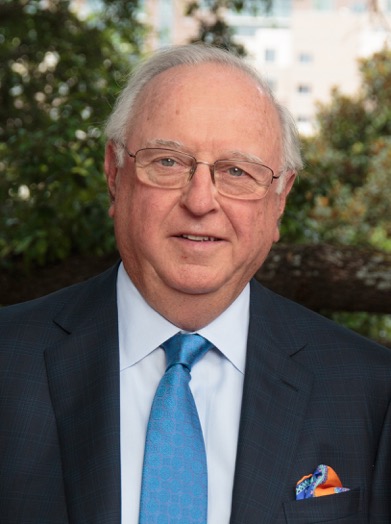
Mechanical Engineering Hall of Fame
BSME, The University of Texas at Austin, 1965
Clifford L. Thomson was born in a small town in Missouri and spent his early years there. While he was in the tenth grade, his family moved to Austin, where he graduated from McCallum High School in 1960. Clifford liked math and was encouraged to enter engineering at The University of Texas, where he received a BS in mechanical engineering in June of 1965.
In that same month he married his high school sweetheart, Bonnie Messer. The two moved to Odessa, Texas, where Clifford started his career as a production engineer with Sun Oil Company, which later became Oryx Energy Company. One year later he took a leave of absence from Sun in order to fulfill his ROTC obligation of two years’ service. During this time, he lived at Fort Belvoir, Virginia; Fort Hood, Texas; and Fort Bragg, North Carolina. The year of 1967 was spent in service in Vietnam, for which Clifford received the Bronze Star Medal.
In May of 1968 he rejoined Sun Oil Company in Longview, Texas. It was there that his son, Jay, was born. Various engineering and management positions took Clifford and family to Midland, Texas; Colorado City, Texas, where he served on the city council; Tulsa, Oklahoma, where he completed the Program for Management at Harvard; Oklahoma City, Oklahoma; Dallas, Texas; and Quito, Ecuador. He also served on the UT ME External Advisory Committee.
Upon returning to the U.S., Clifford retired from Oryx Energy. After living and working for Randall and Dewey, Inc. in Houston for three years, Clifford and family returned to Dallas where he ultimately went to work for Chief Oil and Gas Company in 1998. He worked there until he retired in 2012.
With retirement has come an effort to improve his golf game, to grow pecans and to develop “real” Texas longhorns, but the highlight of his retirement is watching his three grandsons grow up.
Catherine Tradd
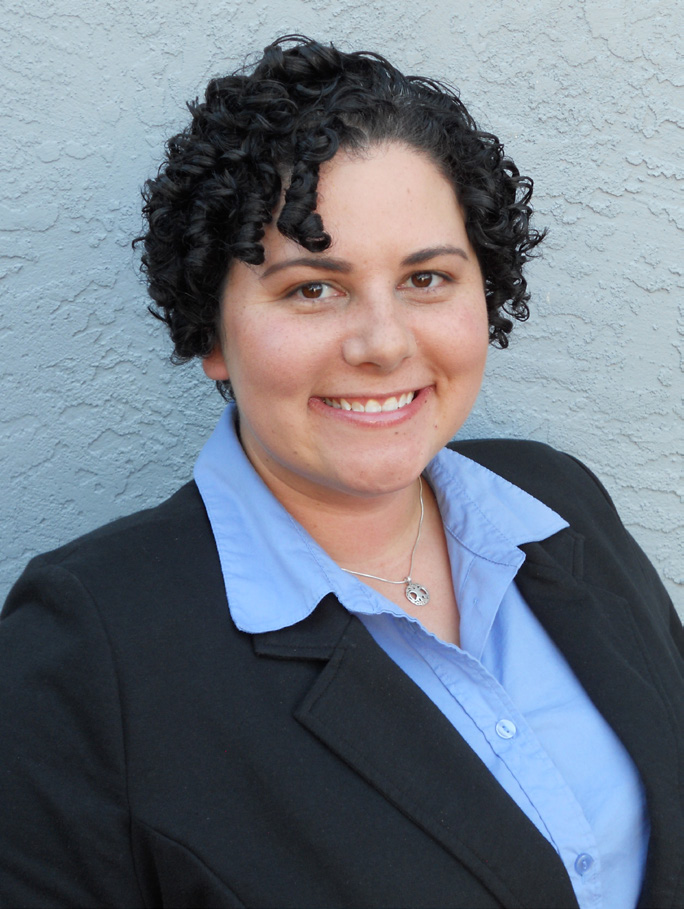
Outstanding Young Mechanical Engineer
BSME, The University of Texas at Austin, 2007
Catherine “Cat” Tradd loves solving problems. Growing up on a cattle ranch in the Texas Hill Country, there were always many to solve. At 12-years-old, Cat discovered her passion for engineering when she attended a Careers in Engineering for Women event sponsored by The University of Texas at Austin’s Women in Engineering Program. This amazing outreach event made her realize that she could solve problems for a living, and that was awesome.
Cat graduated with a BS in mechanical engineering from UT in 2007. During her academic career, she had the privilege of supporting Dr. Carolyn Seepersad’s research initiatives in 3-D printing and additive manufacturing design. She was a leader in multiple student organizations and led a Freshman Interest Group. During the summers, she completed four internships in different fields of engineering: field service with Schlumberger, and tool design, manufacturing engineering, and R&D with Caterpillar, Inc. (CAT). These experiences enriched her academic work, and the minute her boots hit the manufacturing floor, she knew she was home.
Cat started full-time with CAT in a three-year leadership rotational program where she served as a manufacturing engineer for fluid contamination control & assembly best practices for heavy equipment; production supervisor for machining, fabrication, and assembly of mining products; and supply chain planning & supplier development engineer for tractor undercarriage products. This established her foundation of manufacturing, engineering, and leadership experience.
After completing the rotational program, Cat transferred to Solar Turbines, a wholly owned subsidiary of CAT where she supervised turbomachinery production teams in three different manufacturing environments on three different shifts. Production leadership is one of the hardest and best jobs Cat ever had. She learned about herself as a leader, the incalculable value of people, the power of believing in the product, and the strength of engaged teams.
Subsequently, she returned to engineering as a turbomachinery package manufacturing engineer, where she supported project deliverables and interfaced with production. She loved revisiting her technical roots and developed a deep knowledge of turbomachinery packaging.
Cat earned her 6sigma Black Belt when she changed jobs again to move into a strategic role supporting engineering and part metadata as the business process lead responsible for part classification and attributing as a Windchill system administrator. She led a cross-functional enterprise taxonomy governance team, set part metadata strategy, and became a sought-after industry expert in database metadata management.
After 10 years of industrial experience, Cat is now a program manager for Solar Digital, a customer-facing business unit bringing world-class performance and reliability solutions based on connected products and real-time, data-driven, purpose-built performance applications.
Cat is a leader and volunteer for Solar’s Employee Resource Groups, the Society of Women Engineers, the AIDS Walk, and Relay for Life. She has been recognized as a 30 Under 30 award winner by the Society of Manufacturing Engineers, was inducted into the UT Department of Mechanical Engineering’s Academy of Distinguished Alumni, and has been recognized with Key Contributor Awards by both Caterpillar and Solar Turbines.
Cat’s favorite activities include problem solving, reading, and traveling with her amazing wife, Natalie, and their dogs.
Harovel Wheat
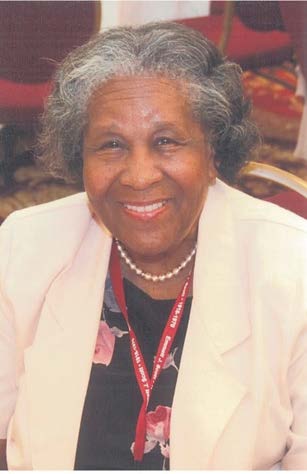
Mechanical Engineering Hall of Fame
BA, Chemistry, University of Colorado, 1969
MS, Metallurgy, University of Denver, 1974
Ph.D., The University of Texas at Austin, 1985
Harovel Grays Wheat grew up in Sulphur Springs and Tyler, Texas as the only child of Harrison and Velma Grays. After graduating cum laude with a BA in Chemistry from the University of Colorado in 1969, she worked for Marathon Oil Company as a technical information specialist. She married Dan Wheat in 1970 and was married until 1990. She received her MS in metallurgy from the University of Denver in 1974 and worked as a research associate in the Department of Mechanical Engineering at Colorado State University until 1975. Her first child, Danelle, was born in 1977. Her second child, Daniel, was born in 1984, shortly before she received her Ph.D. in mechanical engineering from The University of Texas at Austin in 1985. After graduating, she became a research associate in the department and joined the faculty as an assistant professor in 1986.
Her research interests focused on the corrosion of structural materials, particularly steel-reinforced concrete, metal and polymer matrix composites, corrosion diagnostics, smart coatings, and corrosion issues associated with clean energy technologies. In her first five years as a faculty member, she was awarded the Office of Naval Research Young Investigator Award (1989), the Mechanical Engineering Teaching Award (1991), and the Banks McLaurin Fellowship in Engineering (1991). She was promoted to associate professor in 1992.
Over the years, Harovel graduated 26 MS and Ph.D. students, served on scores of doctoral committees, supervised more than 20 undergraduate research assistants, and served as the faculty advisor for more than 50 senior design projects. She served as the departmental associate chair for academic affairs for 14 years (2001-2015) and as the undergraduate faculty advisor for 11 years (2004-2015). She was also a Faculty Fellow at NASA Langley Research Center and had a Faculty Sabbatical at NASA Kennedy Space Center in the summer and fall of 2004, respectively.
In addition to her other duties, Harovel served as the Faculty Advisor for the Society of Women Engineers, the National Society of Black Engineers, Pi Sigma Pi, the Texas Society of Professional Engineers, and the American Society of Mechanical Engineers. She participated in many mentoring programs and served as a faculty fellow in Kinsolving, Littlefield, and Jester residence halls for more than 15 years. Outside of work, Harovel is an active member of Ebenezer Baptist Church and enjoys music, gardening, and traveling.
Harovel retired in August of 2015, and has remained active in corrosion issues and undergraduate/graduate engineering education.