2017 Academy of Distinguished Alumni Announced
The Walker Department of Mechanical Engineering has announced the 2017 honorees of its Academy of Distinguished Alumni.
As a way of recognizing the accomplishments and careers of our outstanding alumni, the Walker Department of Mechanical Engineering established the Academy of Distinguished Alumni in 2004. The Academy’s purpose is to recognize high-achieving mechanical engineers from among the UT Austin community and from the engineering community at large, to champion the mechanical engineering profession and to build a strong community and facilitate interactions among our students, faculty, alumni and corporate partners.
This year’s honorees include:
Jacob Cordova
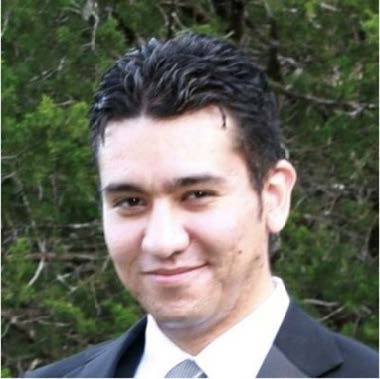
Outstanding Young Mechanical Engineer
BSME, The University of Texas at Austin, 2007
While a student at UT Austin, Jacob Cordova was active in organizations and participated in internship programs. He was a member of the Roden Leadership Program, secretary and corporate relations officer for the American Society of Mechanical Engineers (ASME), a Freshman Interest Group mentor, and a supporter of the Society of Women Engineers (SWE). In 2005 he interned with the remanufacturing division of Caterpillar, and in 2006 he interned with the Atlas Centaur rocket propulsions team at Lockheed Martin. Jacob is a LeaderShape graduate and served as a student cluster facilitator before graduating.
After graduation, Jacob joined Lockheed Martin in Houston as an engineer on the NASA Orion manned spaceflight program. In this role, he supported design, test, analysis, manufacturing, and systems engineering of spacecraft interior components, habitation accommodations, heat transfer systems, and astronaut seat structures. During this time Jacob also supported the Space Alliance Technology Outreach Program (SATOP) as an engineer and later served as regional manager for Lockheed Martin relations. In this role he built and led teams of engineers and scientists to assist startups, entrepreneurs, and university faculty members with product development of their innovations.
In 2010, Jacob supported the NASA Johnson Space Center advanced planning office, where he cofounded the Sandbox, an Innovation Design Center built to facilitate the creation, transfer, and commercialization of technologies developed by the American space program. As chief architect, Jacob oversaw facility design, infrastructure layout, machine selection, and user experience. Lessons learned were shared with UT Austin during the concept design phases of the EERC Longhorn Maker Studio.
In 2011, Jacob joined Lockheed Martin in Denver as a manufacturing engineer and production coatings laboratory engineering lead. In 2013 he founded PWJ Strategies to support research, development, and commercialization of advanced technologies. Today, PWJ is working to synthesize molecular biology with physics and engineering to increase crop yields. Jacob is also director of venture capital analytics for Rockies Venture. In this role he established a Kauffman Foundation Research-based due diligence program and leads analyst teams with engineering, law, investment banking, and business backgrounds.
Jacob is grateful for the catalyzing experience UT Austin had in his life and has continued to support and engage with UT Austin and the Cockrell School. He serves the Engineering Advisory Board (EAB), is cofounder and vice president of strategy for the Longhorn Engineering Advisory Delegation (LEAD), and cofounder and managing partner for the UT Austin Genesis Program. He and his wife Lauren, also a UT Austin BSME 2007, provided founding capital for the Genesis Program and enjoy contributing time, treasure, and talents to UT students.
Kenneth Diller
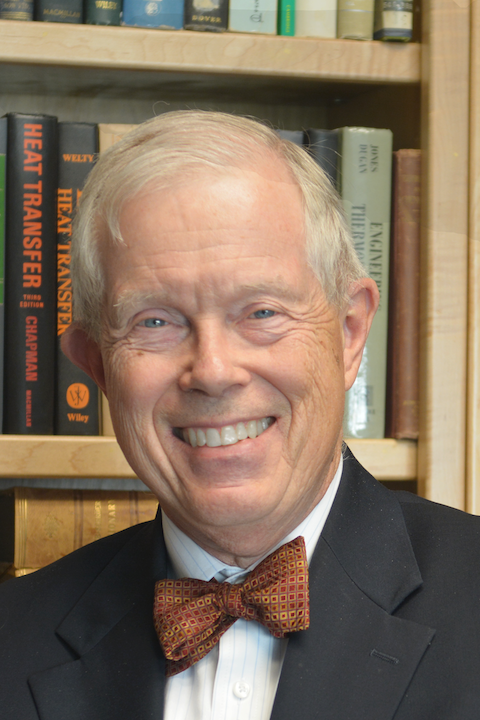
Honorary Mechanical Engineer
BSME, Ohio State University, 1966
MSME, Ohio State University, 1967
Sc.D., Massachusetts Institute of Technology, 1972
Ken Diller has been an engineering professor at UT Austin since 1973. He is the former founding chairman of the UT Biomedical Engineering Department, and previously was chairman of the Mechanical Engineering Department (these administrative appointments spanning a 19-year period). His primary areas of research focus on the broad field of biomedical heat transfer, with current studies focused on temperature control to enhance the ability to have consistent quality sleep, to lower blood pressure overnight to reduce the incidence of vascular diseases, and the manipulation of body core temperature to keep patients warm during surgery or to cool patients suffering a loss of brain blood perfusion following heart attack, stroke, or traumatic brain injury.
He has published about 300 refereed articles and book chapters, has three dozen filed or issued patents, and has edited or authored sixteen books on these and other topics. He has been elected Fellow of the ASME, BMES, AIMBE, AAAS, and the Society for Cryobiology, and has won the ASME Heat Transfer Memorial Award, ASME Bioengineering Lissner Award, and ASME/AIChE Max Jacob Heat Transfer Award. He was elected an Outstanding Mechanical Engineering Graduate of Ohio State University. He has been faculty advisor for more than 40 years of the UT organization Christian Students on Campus, during which time he has mentored thousands of students during their time at UT.
As a UT professor, Ken is very passionate about his teaching, which covers a spectrum of courses and students ranging from incoming freshmen to advanced Ph.D. students. He created and teaches an award-winning course in the Freshman Signature series on the topic “Science and the Bible.” He also created and teaches a class on how to construct and deliver a course using inquiry learning methods for Ph.D. students who are intending to pursue careers in academia. Additionally, for more than 30 years Ken has held a Life Fellow position in Clare Hall College at the University of Cambridge in England, where he takes UT students each summer for a Maymester study abroad experience as he teaches them the UT course on Biotransport.
A humorous experience occurred early in his teaching career when his secretary made a typo in preparing the syllabus for his Heat Transfer course, ME 339. On the first day of class after passing out and reviewing the syllabus, Professor Diller asked if there were any questions. One student put up his hand and timidly asked, “Is there any significance to your name being Dr. (K)iller?” at which point the class burst into laughter. The course went well.
Linn Draper
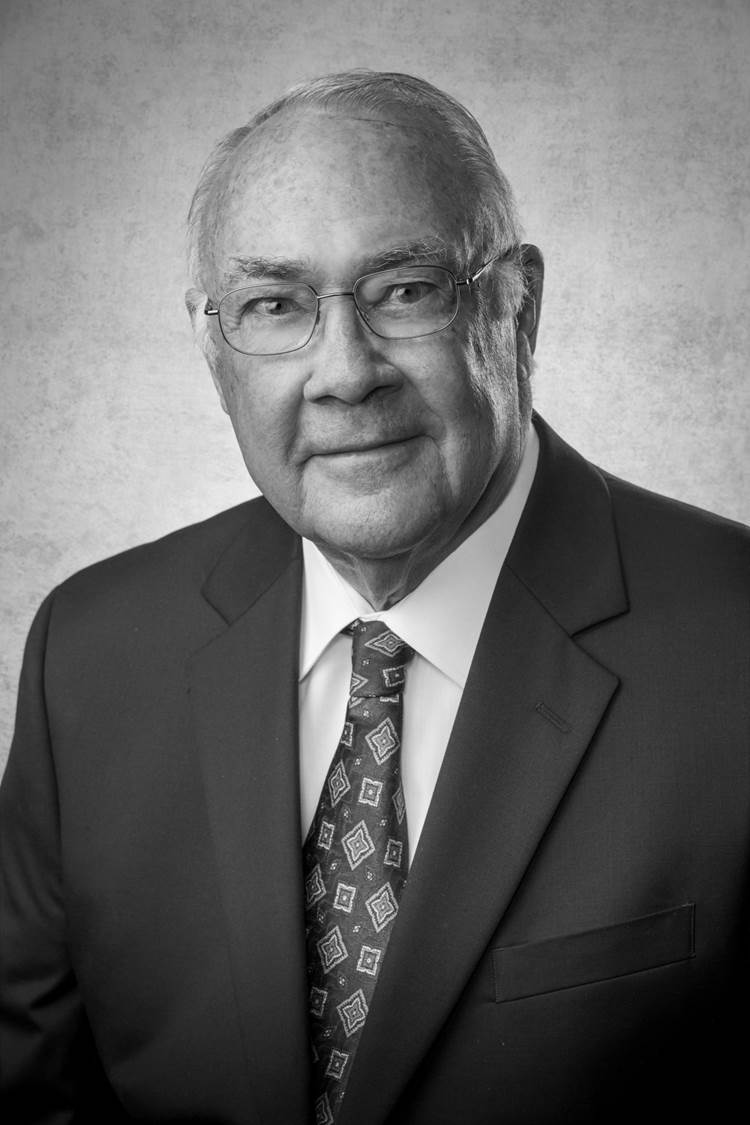
Honorary Mechanical Engineer
BACE, Rice University, 1964
BSCE, Rice University, 1965
Ph.D., Cornell University, 1970
E. Linn Draper, Jr. is the retired chairman, president and CEO of American Electric Power Co. He served in that capacity for 12 years. Prior to AEP, Draper was with Gulf States Utilities for 13 years, where he held a variety of technical and administrative positions including chairman, president and CEO for the last 6 years. He began his career at The University of Texas at Austin, where he was director of the Nuclear Reactor Laboratory and the nuclear engineering program for 10 years.
Draper has been a member of the Board of Directors of eleven New York Stock Exchange listed companies, including current service at Alliance Data Systems and NorthWestern Energy, where he is non-executive chairman of the board.
Draper is a member of the National Academy of Engineering and the Academy of Medicine, Engineering and Science of Texas, where he served as president. He is a registered professional engineer in the State of Texas.
Draper is the author of a number of technical publications and the editor of two books.
During his professional career, he served as president or chairman of the following organizations: the American Nuclear Society (ANS), the Edison Electric Institute (EEI), the Electric Power Research Institute (EPRI), the Institute of Nuclear Power Operations (INPO), the Nuclear Energy Institute (NEI), the Nuclear Utility Management and Resources Council (NUMARC), the Association of Electric Companies of Texas (AECT), the National Coal Council (NCC), the Ohio Business Round table (OBRT), and the Simon Kenton Council of the Boy Scouts of America.
He is a member of the Cornell University Council, The University of Texas Engineering Advisory Board, and The University of Texas Energy Institute Advisory Board. He served two terms as a member of the Board of Governors for the Argonne National Laboratory. He was a member of the Board of Governors for the Nature Conservancy and Resources for the Future.
Dr. Draper is an Eagle Scout and a Distinguished Eagle Scout, an award presented to Eagle Scouts who after 25 years have distinguished themselves in their life work and have shared their talents with their communities on a voluntary basis.
He was educated at Williams College, Rice University (B.A. – 1964, B.S. – 1965) and Cornell University (PhD -1970).
Linn and his wife Debby have been married since 1962. They have 4 children and 9 grandchildren. They divide their time between Texas and the Adirondack Mountains of New York.
Leslie Fallon
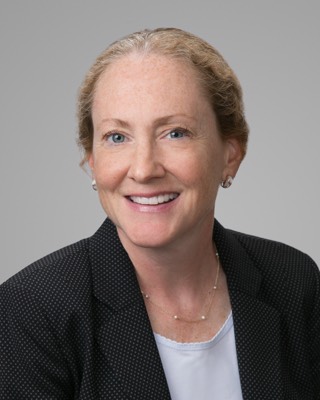
Distinguished Mechanical Engineer
BSME, The University of Texas at Austin, 1983
Leslie Fallon was born in Houston, Texas. Her father was a professional mechanical engineer who ran a business specializing in vibration isolation and acoustics. Her mother was involved in family and volunteer service.
After graduating from Memorial High School in Houston, she started in the Fall of 1979 at The University of Texas at Austin to study mechanical engineering. Every summer during college she worked at her father’s company drafting drawings to design specifications for jobs around the country. At UT, she joined Tau Beta Pi, Pi Tau Sigma, and the Student Engineering Council.
In September 1983, she began her career with Exxon Company, U.S.A. at headquarters in downtown Houston in a computer applications group, developing programs for engineering solutions. In 1989, she transferred to a division office in Midland, Texas in an operations assignment as a reservoir engineer in major field units responsible for reservoir surveillance and drilling development programs. Over the next seven years she had various assignments, including the evaluation and marketing of oil and gas properties, conducting asset improvement studies, and information management. In 1996, she returned to Houston and transferred to Exxon Production Research into an economic modeling applications group.
In 1998, she joined Miller and Lents, a global oil and gas consulting firm in Houston specializing in reservoir engineering evaluations for clients around the world. Her areas of expertise include estimating oil and gas reserves for nearly all major geologic basins in the United States plus areas in Russia, Kazakhstan, and Egypt. Clients include large and small oil and gas companies, operators, non-operating interest owners, mineral interest owners, foundations, financial institutions, and investors. The reserve evaluations are used for financing of oil and gas development projects and reporting to shareholders and investors. In 2004 she became a vice president at Miller and Lents.
Leslie serves on the UT Cockrell School of Engineering Advisory Board and participated in the UT Women in Engineering Program (WEP), including as a panelist at the Women Changing the World event. She and her husband established a Cockrell School of Engineering Endowed Scholarship as well as a second endowed scholarship in Liberal Arts. She is a Life Member of Texas Exes and a member of the Longhorn Foundation.
Glenn Gilkey
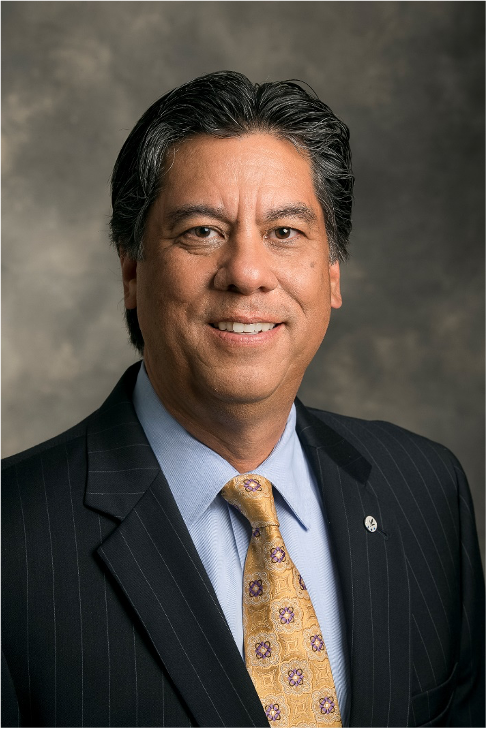
Mechanical Engineering Hall of Fame
BSME, The University of Texas at Austin, 1980
Glenn Gilkey was born in Indianapolis, Indiana and at the age of four moved to El Paso, Texas. His interest in construction probably began early, as he worked for his father, who was a manufacturer’s representative and sold HVAC equipment to commercial builders in the region. His mother is Japanese and instilled in him humility and the confidence that he could do anything he set his mind to.
He enrolled in the Fall of 1976 at The University of Texas at Austin. He had summer internships drilling oil wells in West Texas for Santa Fe Drilling (1978, 1979) and in plant engineering with DuPont in Orange, Texas (1980). In January of 1981, he began his career with Fluor Corporation in Houston, Texas as a mechanical engineer in the group responsible for the design of pressure vessels and heat exchangers. He worked on multiple domestic and international projects for customers like Texaco, Exxon, Fina, Valero, and Saudi Aramco as an equipment engineer, a lead mechanical engineer, and project engineer.
In 1992 he accepted a leadership role to implement Fluor’s 3D design platform that fundamentally changed the way plants were designed. In 1996 he was promoted to General Manager of Engineering for the Houston office and led approximately 1700 engineers and designers across all engineering departments. During this time, he also led Fluor’s recruiting efforts at UT Austin and served on the ME External Advisory Committee. In 1997 he was named Fluor’s Global Leader for Engineering. In 1998 he was named General Manager for Fluor’s Houston office (approximately 3000 employees), making him responsible for projects executed in Houston. In 2000 he was asked to relocate to the Netherlands and became VP and General Manager for Fluor’s office in the Netherlands that executed projects in the Middle East and Europe.
In 2003 he was asked by the CEO to return to the U.S. to lead the reimplementation of SAP, the creation of Fluor’s Knowledge Management platform, and all of Fluor’s Project execution groups. In August of 2005 he was asked to take a leadership role in Fluor’s contract with the U.S. Government (FEMA), arriving in Baton Rouge, Louisiana just days after Hurricane Katrina. Fluor’s contract was to assist FEMA in the deployment of temporary housing for the thousands of people displaced by the storm. In December of 2006 he relocated to Greenville, South Carolina and was named VP of operations responsible for all projects executed by Fluor’s mining, life sciences, and infrastructure business lines.
In December of 2008 he was asked by the CEO to lead HR and administration and relocated to Fluor’s headquarters in Dallas, Texas. The CEO asked him to use his business acumen and creditability to help HR become more strategic, and to use these same attributes to help the business use people more strategically. In this role he was responsible for all HR and leadership development, Fluor’s 7 million square foot real estate footprint, community relations, the Fluor Foundation, and Fluor’s temporary staffing Company (TRS). Glenn Retired from Fluor in January of 2017.
Glenn has been married for 36 years to his best friend and partner Nancy (BSN 1980), whom he met at UT in 1977. He has two daughters, Jennifer and Melissa, and two granddaughters. Glenn and Nancy have gifted an endowed scholarship in Mechanical Engineering and Nursing.
Noboru Kikuchi
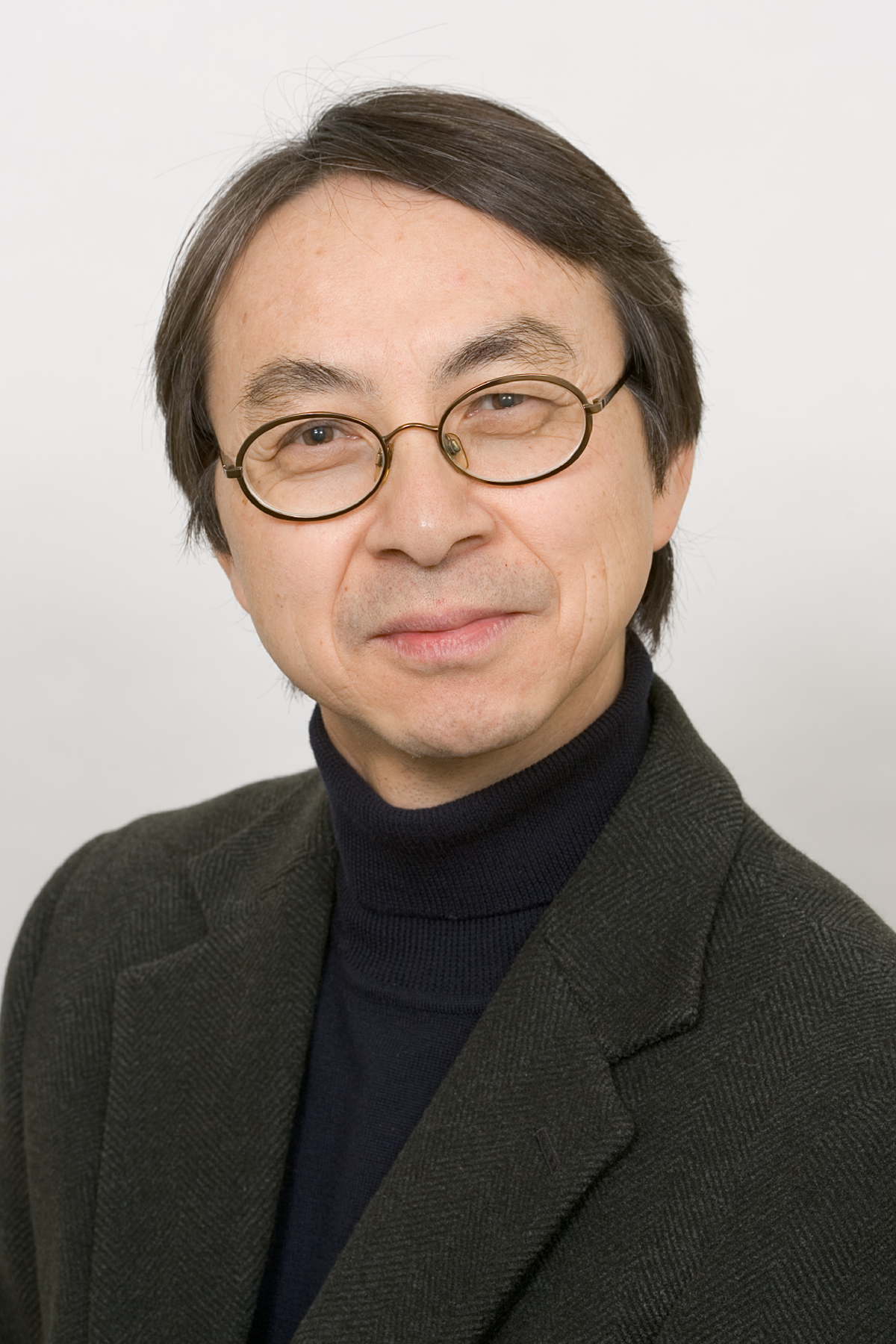
Mechanical Engineering Hall of Fame
BECE, Tokyo Institute of Technology, 1974
MSGE, The University of Texas at Austin, 1975
Ph.D., The University of Texas at Austin, 1977
Noboru Kikuchi is the President of Toyota Central R&D Labs, INC., Japan, Senior Technical Executive of Toyota Motor Corporation, Board Member of Toyota Research Institute, Cambridge, MA, USA, and the Director of TRINA (Toyota Research Institute of North America, Ann Arbor, Michigan, USA). He is also the Roger L. McCarthy Professor Emeritus of Mechanical Engineering at the University of Michigan, Ann Arbor, Michigan, USA. His engineering specialty is Digital Engineering including CAD/CAM/CAE for Automotive, Mechanical, Aerospace, and Civil Engineering as well as medical applications.
He is a pioneer of the Topology Optimization method for light-weight structural design using Multi-scale Multi-Physics CAE in computational science and engineering based on Mathematical Theory of Optimal Design and Optimal Control. Further, he is a leading researcher for computer aided industrial manufacturing technologies including CT scan and 3D printing.
His current technical interest is application of deep learning methods and other mathematical methods to autonomous driving of cars. He was elected to the National Academy of Engineering (NAE) in 2017 “For contributions to theory and methods of computer-aided engineering and leadership in their applications in the automotive industry worldwide.”
Gary Polansky

Distinguished Mechanical Engineer
BSME, The University of Texas at Austin, 1978
MSME, The University of Texas at Austin, 1980
Ph.D., The University of Texas at Austin, 1983
Gary Polansky joined Sandia National Laboratories (Sandia) in 1983 after finishing his Ph.D. at The University of Texas at Austin. In his early career, he pioneered the development of aerodynamic and aerothermodynamic analysis tools that became the standard at the laboratory for maneuvering hypersonic systems. These tools enabled rapid analysis of complex systems and served a critical role in many successful flight tests. After nearly 30 years, these tools remain in routine use at the laboratory.
In 1990 he joined an effort to develop high performance nuclear thermal propulsion for the Strategic Defense Initiative Organization. This team performed several successful reactor experiments showing the feasibility of an advanced nuclear fuel form. As SDIO priorities shifted, Gary led efforts to engineer reliable systems for manned space flight in support of the NASA Space Exploration Initiative. He also led a combined Department of Energy/Air Force program to develop hybrid nuclear power and propulsion systems for a new generation of satellites.
The Air Force also selected Gary to lead the system integration effort for the Topaz International Program. This program was one of the first large scale scientific and technical collaborations between Russia and the United States, employing more than 300 Russian scientists and engineers at its peak. Although the program’s goal of flying a Russian space nuclear reactor power system was never achieved, it did establish a basis for international cooperation and opened a number of Russian aerospace facilities to western collaborators. Indeed, personnel from the Topaz International Program remain engaged in the International Space Station program today.
Throughout his career, Gary has sustained his involvement in Aerospace Nuclear Safety. He advised the Interagency Nuclear Safety Review Panel (INSRP) in the launches of Pluto New Horizons (PNH) and the Mars Science Laboratory (MSL). The PNH launch was particularly challenging from a nuclear safety perspective as legacy (aged) nuclear fuel pellets had to be utilized due to a fuel shortage. Gary led the efforts to recover the historical data on fuel aging, analyze the data in the context of the PNH mission, and develop models to characterize the uncertainty associated with aged fuel. The work was critical to the INSRP independent safety assessment and the presidential decision to launch PNH. He was recognized with a NASA achievement award for this effort.
For the last decade, Dr. Polansky has provided Sandia with technical and management leadership of hypersonic flight systems for NASA, DARPA, Air Force, Navy, and Army applications. This effort culminated in the Advanced Hypersonic Weapon flight test on November 11, 2001. He was the project manager over the development of both the booster and the hypersonic glide body for this groundbreaking test. The test was the first successful long range boost-glide hypersonic flight and achieved all test objectives. The test team was recognized with a Lockheed Martin NOVA Award, and Gary was recognized by the Precision Strike Technical Association with Richard H. Johnson Technical Achievement Award for this accomplishment.
Currently, Dr. Polansky is senior scientist with broad technical responsibilities across hypersonic flight systems, responsive space launch systems, and related technologies at Sandia.
Michael Reese
Mechanical Engineering Hall of Fame
BSME, The University of Texas at Austin, 1970
BSID, Art Center College of Design, 1974
Michael Reese was born in Jacksonville, Texas and grew up in the oil fields of east Texas. He showed a fascination for design and engineering at an early age and made many of his toys in the shop of his father’s garage. When he was twelve, he designed and built a go-kart powered by a lawn mower engine. Michael’s family moved to Houston in 1962.
While in high school, he designed and built several 1/12th scale model cars and entered them in the Fisher Body Craftsman’s Guild competition sponsored by General Motors. In 1964, he won a top award including a national scholarship. He followed the advice given to him by Chuck Jordon (GM’s assistant head of styling) and earned a degree in mechanical engineering from The University of Texas at Austin.
After graduating in 1970 with a BSME, he married his sweetheart, Pam, and started a job with General Dynamic’s Convair Division in San Diego, California. While at GD, he worked on the development of the DC-10’s passenger door mechanism and a performance enhancement program for the F-111 fighter jet.
In the fall of 1971, Michael pursued an industrial design degree at Art Center College of Design in Los Angeles. He graduated with distinction in 1974 and accepted a professorship in the College of Architecture at Georgia Institute of Technology. At the same time, he started his consulting design business, Reese Design. His first client was Texas Instruments and he had the privilege of working on such ground-breaking projects as their first digital watches, hand-held calculators, and the “Little Professor” (a children’s math learning aide).
His next big break came in 1977 when he was given the opportunity of creating an interior for a Boeing 707 private jet. One aircraft project led to another, and over a 21-year period Reese Design developed an international clientele of private aircraft owners. Their projects ranged in size from Boeing 747s and Airbus A-340s to Blackhawk and S-76 helicopters.
In 1998, Michael retired from Reese Design at age 51 to pursue other interests. He and his wife created The Reese Foundation, whose mission is to support the arts, education, and the environment. They have been actively involved in numerous conservation projects and have supported local arts and educational organizations. Michael continues his creative endeavors in his art, automotive, and architecture projects. In 2016, Michael received a prestigious Lifetime Achievement Award from Art Center College of Design.
He and his wife have a wonderful daughter and son-in-law, Shelly and David, and two extraordinary grandchildren, Reese and Weston. Today they divide their time between their home on Lake Austin and their ranches in the Texas Hill Country and in Colorado. Michael is forever grateful for the foundation and springboard that his engineering education at UT Austin provided him.
Alok Warey
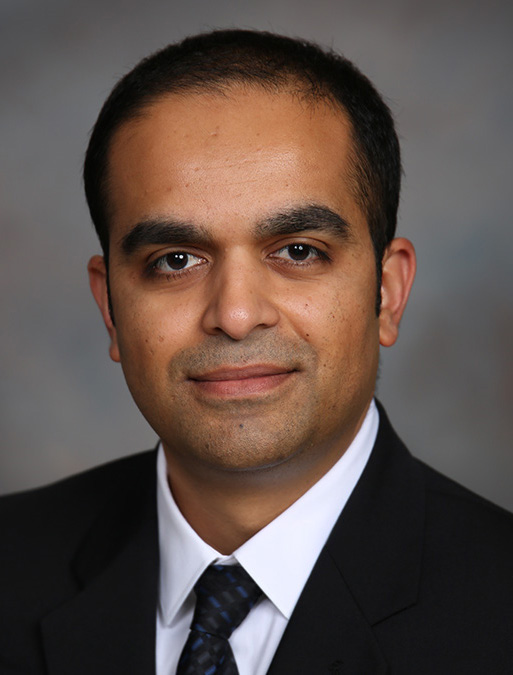
Outstanding Young Mechanical Engineer
BEME, National Institute of Technology, India, 2000
MSME, The University of Texas at Austin, 2003
Ph.D., The University of Texas at Austin, 2005
Dr. Alok Warey is a Technical Fellow and Research Group Manager at General Motors (GM) Global Research and Development. Alok is a recognized expert in the application of AI and Machine Learning to various engineering domains and Scientific Machine Learning (SciML). He leads a team of researchers developing computational and AI/ML models for vehicle occupant safety, comfort, and accessibility. He is not only involved in AI-based technology development, but also in the steering and guidance of application of Machine Learning and Generative AI for multiple engineering, innovation, and design organizations.
Alok is a co-organizer for the AI and Machine Learning session at the SAE International World Congress (WCX). He is a recipient of the SAE International Forest R. McFarland Award for outstanding contributions toward the work of the SAE Engineering Meetings Board in the planning, development, and dissemination of technical information through technical meetings and conferences and the SAE International Outstanding Oral Presentation Award for excellence in oral presentation of a research paper at an international conference. He is also a reviewer for several journals and conferences.
Alok has authored or co-authored over 55 external publications including papers in peer-reviewed workshops at top AI/ML conferences such as International Conference on Machine Learning (ICML), Conference on Neural Information Processing Systems (NeurIPS), and International Conference on Learning Representations (ICLR). He holds 12 granted patents, 15 General Motors Trade Secrets, and 1 defensive publication. He was awarded the General Motors Boss Kettering Award in 2021, which is GM’s highest award for recognizing individuals who have developed truly outstanding inventions or innovations that provide identifiable and substantial benefit to GM.
Alok and his wife, Nafisa, are avid travelers. They often travel to new destinations all over the world.