
Biomechanical Engineering
Biomechanical engineering involves the application of Mechanical Engineering knowledge, skills, and principles to the conception, design, development, analysis and operation of biomechanical systems, including artificial organs and prostheses; bioinstrumentation and measurements; bioheat transfer; biomaterials; biomechanics; bioprocess engineering; cellular mechanics; design and control of biological systems; and physiological systems. Graduate courses and research areas are available in (but not limited to):
- Biofluid Systems
- Bioheat Transfer
- Bioinstrumentation
- Biomaterials
- Biomechanics
- Biomedical Optics
- Biosignal Analysis
- Cellular Biomechanics
- Computational Modeling
- Medical Robotics
- Rehabilitation
- Ultrasonics
Entrance Requirements
Entrance into the program is governed by the requirements of the Graduate School and Graduate Studies Committee of the Walker Department of Mechanical Engineering. The prevailing standards for admission to the department include an acceptable undergraduate GPA in Mechanical Engineering or a related field. The ME Biomechanical Program is administered by the area faculty. Biomechanical area faculty members should be contacted regarding the following items:
- Specific requirements for coursework and degree plans.
- Any special requests for variances from the specific ME requirements.
- Assignment of Supervising Professor and office/laboratory space.
- Financial support as a Research Assistant, Teaching Assistant, or offer of fellowship to allow in-state tuition.
- Ph.D. Qualifying Exam requirements.
The Graduate Program in the Walker Department of Mechanical Engineering is centered on activities in Mechanical Engineering, in respect to the required coursework, the research work, and the background required of the student. The major course requirements and the instructional faculty are drawn from the Department of Mechanical Engineering. The required major courses emphasize mechanical engineering and the minor courses can be drawn from the broad spectrum of biomedical courses, including biology and physiology.
Core Courses
The following are core courses for study within the BME Area. Graduate students are expected to understand the material covered in each. These courses serve as the basis for the written Doctoral Qualifying Exams. Each course is offered once annually.
- ME 385J Topic 1: Cell and Tissue Anatomy and Physiology for Engineers
- ME 385J Topic 2: Organ System Anatomy, Physiology, and Pathology for Engineers
- ME 385J Topic 3: Bioelectric Phenomena
- ME 385J Topic 4: Electrophysiology of the Nervous System
- ME 385J Topic 5: Cardiovascular Dynamics
- ME 385J Topic 9: Laser-Tissue Interaction: Thermal
- ME 385J Topic 10: Biomedical Application of Transport Phenomena
- ME 385J Topic 11: Biomedical Engineering Hospital Interfaces
- ME 385J Topic 12: Biomedical Heat Transfer
- ME 385J Topic 13: Molecular Recognition in Biology and Biotechnology
- ME 385J Topic 15: Biosignal Analysis
- ME 385J Topic 16: Laser-Tissue Interaction: Optical
- ME 385J Topic 17: Biomedical Instrumentation II: Real-Time Computer-Based Systems
- ME 385J Topic 18: Biomedical Image Processing
- ME 385J Topic 19: Neuropathophysiology / Prostheses
- ME 385J Topic 20: Network Thermodynamics in Biophysics
- ME 385J Topic 22: Musculoskeletal Biomechanics
- ME 385J Topic 23: Optical Spectroscopy
- ME 385J Topic 26: Therapeutic Heating Modalities
- ME 385J Topic 27: The Biotechnology Revolution and Engineering Ethics
- ME 385J Topic 28: Noninvasive Optical Tomography
- ME 385J Topic 29: Introduction to Biomedical Engineering
- ME 385J Topic 30: Introduction to Biomechanics
- ME 385J Topic 31: Biomedical Instrumentation I
- ME 385J Topic 32: Projects in Biomedical Engineering
Master’s of Science Program
Major Area Courses
- ME 385J Biomedical Heat Transfer
- ME 385J Biomaterials
- ME 385J Biosignal Analysis
- ME 385J Cardiovascular Dynamics
- ME 385J Musculoskeletal Biomechanics
- ME 385J Bioinstrumentation
- ME 397 Intro to Biomechanical Systems
Additional ME courses can be selected from the areas of Acoustics, Thermal Fluid Systems, Dynamic Systems and Control, Design and Manufacturing, Materials Science, Nuclear, or Operations Research.
Minor Area Courses
Minor area courses (2-3) are expected from the following list:
- Additional courses in ME
- Additional courses in BME
- Additional courses in KIN
Thesis
6 semester hours are required for thesis work in the form of ME 698A and ME 698B.
Doctoral Program
Admission to the doctoral program is by examination. The Qualifying Examination is administered to candidates following completion of a minimum of 30 semester hours of graduate study with a GPA of 3.5 or above, and which conforms to the general topical content of the requirements for the Master of Science Degree.
The student application for examination must be approved by one of the biomedical faculty and must contain a comprehensive description of the proposed area of research to be done for the Ph.D. dissertation together with a list of supporting course work. Any deviations from the above must be approved by the ME Biomechanical Graduate Studies Committee.
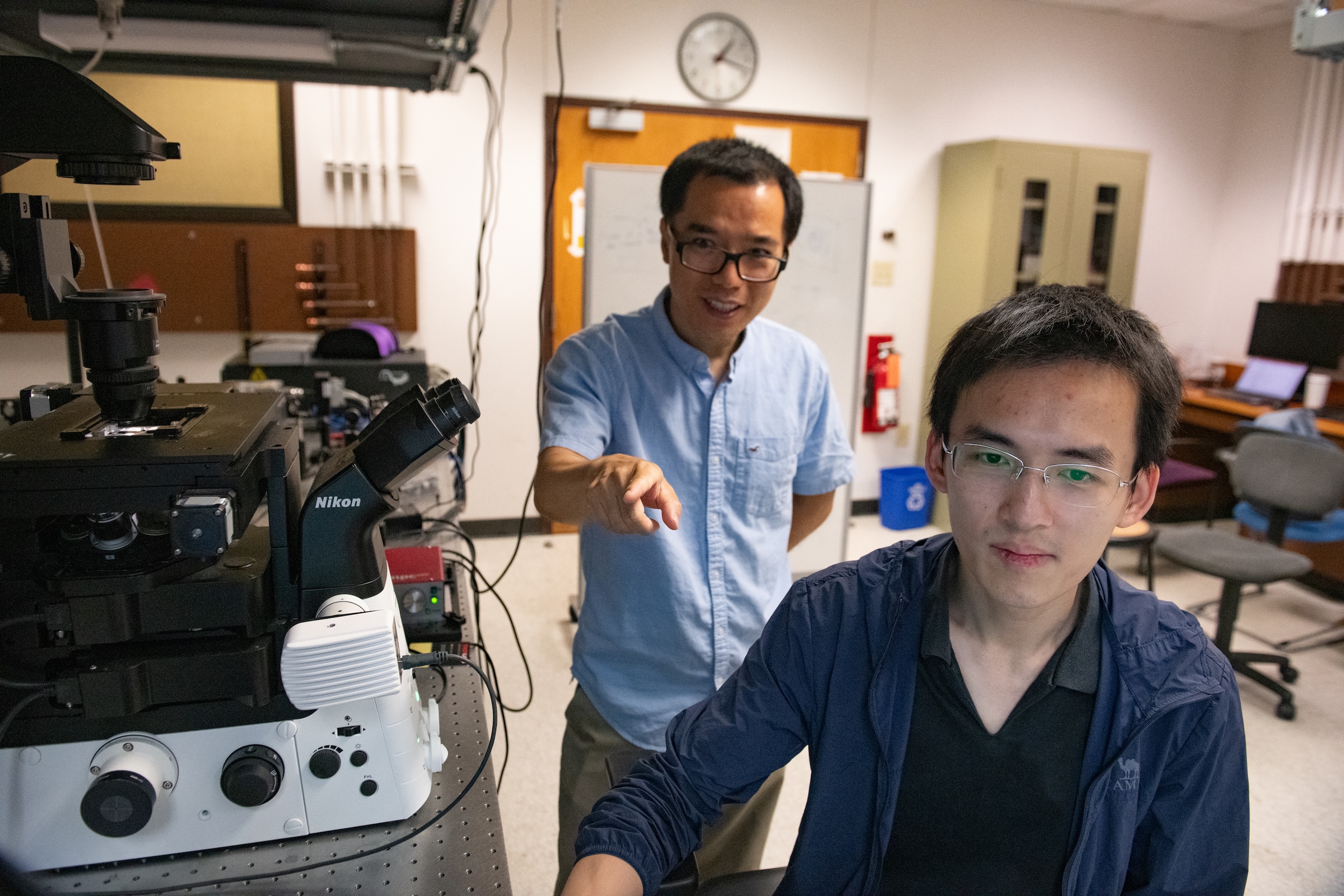
Faculty Research
Search for faculty who match your interests